Archive for category Music
The Echo Nest gets ready for Boston Music Hack Day
Posted by Paul in code, java, Music, The Echo Nest, web services on November 19, 2009
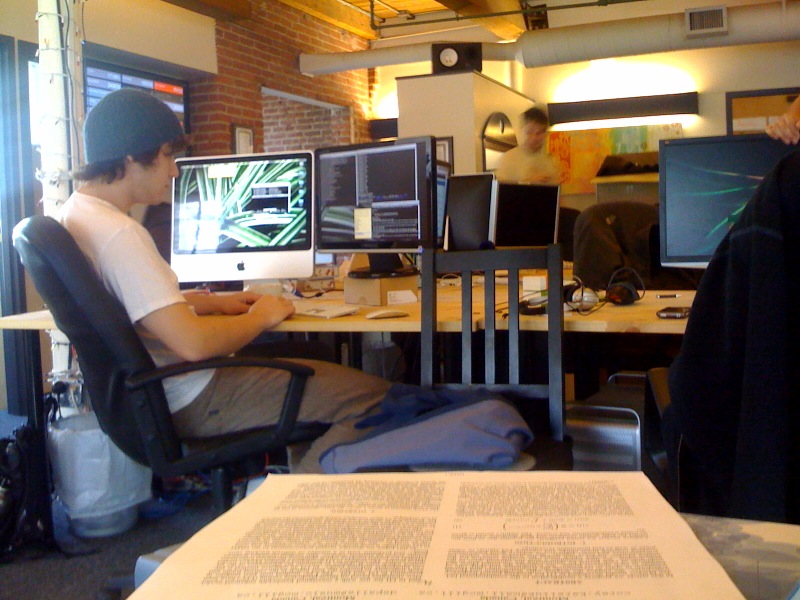
We’ve been extremely busy this week at the Echo Nest getting ready for the Boston Music Hack Day. Not only have we been figuring out menus, panel room assignments, and dealing with a waitlist, we’ve also been releasing a set of new API features. Here’s a quick rundown of what we’ve done:
- get_images – a frequent request from developers – we now have an API method that will let you get images for an artist. Note that we are releasing this method as a sneak preview for the hack day – we have images for over 60 thousand artists, but we will be aggressively adding more images over the next few weeks (60 thousand artists is a lot of artists, but we’d like to have lots more). We’ll also be expanding our sources of images to include many more sources. The results of the get_images are already good. 95% of the time you’ll get images. Over the next few weeks, the results will get even better.
- get_biographies – another frequent request from developers – we now have a get_biographies API method that will return a set of artist biographies for any artist. We currently have biographies for about a quarter million artists – and just as with get_images – we are working hard to expand the breadth and depth of this coverage. Nevertheless, with coverage for a quarter million artists, 99.99% of the time when you ask for a biography we’ll have it.
- get_similar – we’ve expanded the number of similar artists you can get back from get_similar from 15 to 100. This gives you lots more info for building playlisting and music discovery apps.
- buckets – one issue that our developers have had was that to fill out info on an artist often took a number of calls to the Echo Nest – one to get similars, one to get audio, one for video, familiarity, hotttnesss etc. To fill out an artist page it could take half a dozen calls. To reduce the number of calls needed to get artist information we’ve added a ‘bucket’ parameter to the search_artist, the get_similar and the get_profile calls. The bucket parameter allows you to specify which additional artist info should be returned in the call. You can specify ‘audio,’ ‘biographies,’ ‘blogs,’ ‘familiarity,’ ‘hotttnesss,’ ‘news,’ ‘reviews,’ ‘urls,’, ‘images’ or ‘video’ and whenever you get artist data back you’ll get the specified info included. For example with the call:
http://developer.echonest.com/api/get_profile
      ?api_key=EHY4JJEGIOFA1RCJP
      &id=music://id.echonest.com/~/AR/ARH6W4X1187B99274F
      &version=3
      &bucket=familiarity
      &bucket=hotttnesss
will return an artist block that looks like this:
<artist>
    <name>Radiohead</name>
    <id>music://id.echonest.com/~/AR/ARH6W4X1187B99274F</id>
    <familiarity>0.899230928024</familiarity>
    <hotttnesss>0.847409181874</hotttnesss>
</artist>
There’s another new feature that we are starting to roll out. It’s called Echo Source – it allows the developer to get content (such as images, audio, video etc.) based upon license info. Echo Source is a big deal and deserves a whole post – but that’s going to have to wait until after Music Hack Day. Suffice it to say that with Echo Source you’ll have a new level of control over what content the Echo Nest API returns.
We’ve updated our Java and Python libraries to support the new calls. So grab yourself an API key and start writing some music apps.
The most music tech ever squeezed into 1 weekend
Posted by Paul in events, Music, The Echo Nest on November 18, 2009

Workshops! The core activity for the music hack day weekend is hacking. But before we dive into the hard core hacking the weekend starts with a set of music tech workshops where hackers can learn about the latest in music technologies – it’s a way for the hacker to add more tools to their toolbox. On Saturday morning we will be conducting around 25 workshops running in 5 sessions of 5 parallel tracks. Anyone interested in the music+technology space will likely find something interesting – music recommendation, concert/event data, music meta-data, iPhone programming, electronic instrument construction, Playdar, NPR – everything from how to author a song for the Rock Band Network to the Yahoo! query language. If you are going to the Hack Day, you may want to do a little bit of planning to help you decide which of the workshops you’ll want to attend, so check out the workshop schedule.
Software that makes you buy hardware
Some software is so good is makes you want to buy hardware so you can run it best. The classic example is Visicalc which is responsible for making the Apple ][ successful. Over the years a few software apps have been compelling enough that I bought hardware for them:
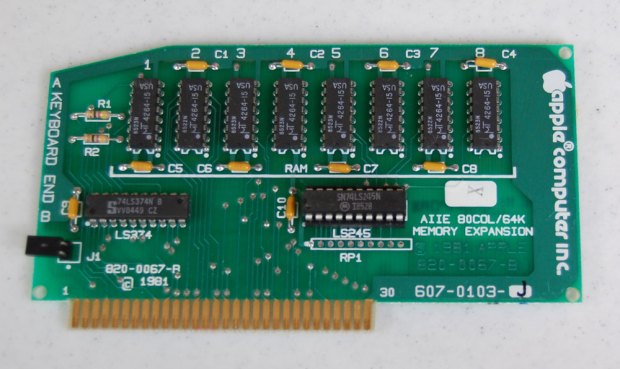
- AppleWriter -> 80 column card – The original Apple ][ could only render a 40 character wide, uppercase display. However, one of the first WYSIWYG word processors, AppleWriter supported an 80 column card. This was a card you’d plug into a slot in the back of the Apple that will let it render 80 column, mixed-case text. It was a must for word processing.
- Doom -> Gravis Ultrasound – Doom was the breakout 3D FPS shooter. It also had awesome sound support – spatial audio with a kickass sound track. The best way to render all that audio was the Gravis Ultrasound. It had really fine sounding midi soundbanks to make the distorted electric guitars sound like it came from a NiN album. I can still remember with great fondness the soundtrack for Episode 1, Level 1:
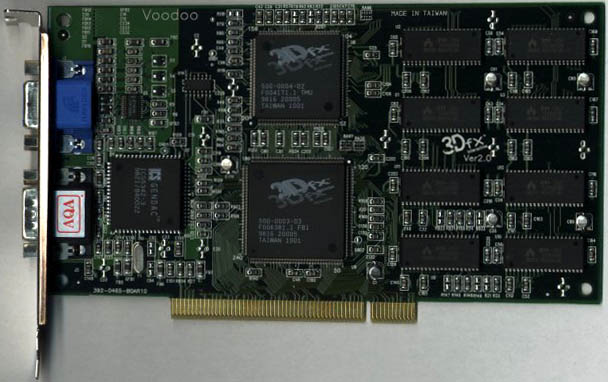
- Quake – > 3DFx Voodoo – the first gaming 3D accelerator (remember video passthrough cables)- all of a sudden 3D FPS games could render at 25 Frames per second.
It has been a while since I’ve been engaged enough with a piece of software to buy some hardware for it. Sure I’ve upgraded memory and video cards to run a new game, but those were natural upgrade stepping stones aligned with the release of software. However, now, once again, I find myself with a piece of software that makes me want to upgrade my hardware in order that I can get the most out of the software. The software is the Spotify iPhone app.
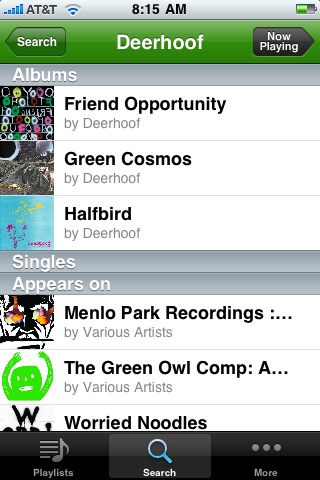
I installed the Spotify app on my 1st gen iPhone yesterday and have been playing with it all day. There’s something about having 5 million songs available in my pocket ready to listen to that is just indescribable. On the drive home, I listened to the WeAreHunted playlist, During dinner time with my 14 year old daughter we listened to the Glee soundtrack. On my after dinner walk I listened to some tracks that I hadn’t listen to since High School. It is quite an interesting feeling to be out in the middle of nowhere, have a song come to mind, and moments later be listening to it. And so I want more. My feeble 1st gen iPhone with its edge network doesn’t get the music fast enough for me, so I have to rely on Wifi syncing. Plus the paltry memory size leaves me with less than 2GB for the local Spotify audio cache. Perhaps enough for a thousand songs, but I want more! And so I shall be upgrading my iPhone soon – the 3G and 32GB footprint will help me take full advantage of this wonderful app.
A little help from my mutant muppet friends
My Fame goes to 11
Posted by Paul in code, fun, java, Music, The Echo Nest, visualization on November 12, 2009
 Sten has released a new version of the ultra-cool, award-winning Music Explorer FX. It has a new feature: The Fame Knob. While you are exploring for music you can set the Fame Knob up or down to control how well known or obscure the artists shown are. If you are looking for mainstream artists set the Fame Knob to high. Looking for new, undiscovered artists? Set the Fame Knob to low.
Sten has also included a number of performance enhancements so everything runs super snappy. Read more about the update on Sten’s blog and give it a whirl.
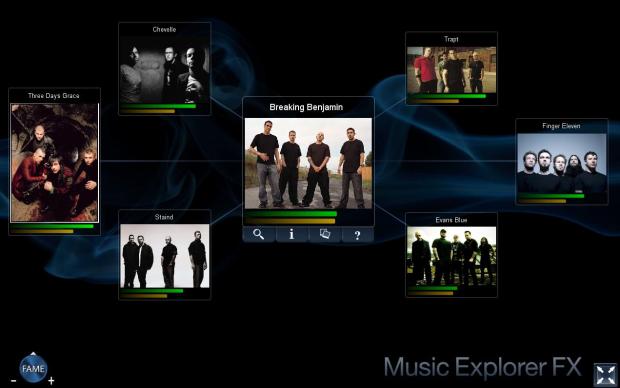
The Music Explorer FX. Click to launch the app.
Getting Ready for Boston Music Hack Day
Posted by Paul in Music, The Echo Nest on November 11, 2009
Boston Music Hack Day starts in exactly 10 days. At the Hack day you’ll have about 24 hours of hacking time to build something really cool. If you are going to the Hack Day you will want to maximize your hacking time, so here are a few tips to help you get ready.
- Come with an idea or two but be flexible – one of the really neat bits about the Music Hack Day is working with someone that you’ve never met before. So have a few ideas in your back pocket, but keep your ears open on Saturday morning for people who are doing interesting things, introduce yourself and maybe you’ve made a team. At previous hack days all the best hacks seem to be team efforts. If you have an idea that you’d like some help on, or if you are just looking for someone to collaborate with, check out and/or post to the Music Hack Day Ideas Wiki.
- Prep your APIs – there are a number of APIs that you might want to use to create your hack. Before you get to the Hack Day you might want to take a look at the APIs, figure out which ones you might want to use- and get ready to use them. For instance, if you want to build music exploration and discovery tools or apps that remix music, you might be interested in the Echo Nest APIs. To get a head start for the hack day before you get there you should register for an API Key, browse the API documentation then check out our resources page for code examples and to find a client library in your favorite language.
- Decide if you would like to win a prize – Of course the prime motivation is for hacking is the joy of building something really neat – but there will be some prizes awarded to the best hacks. Some of the prizes are general prizes – but some are category prizes (‘best iPhone / iPod hacks’) and some are company-specific prizes (best application that uses the Echo Nest APIs). If you are shooting for a specific prize make sure you know what the conditions for the prize are. (I have my eye on the Ultra 24 workstation and display, graciously donated by my Alma Mata).
To get the hack day jucies flowing check out this nifty slide deck on Music Hackday created by Henrik Berggren:
Who isn’t coming to Boston Music Hackday?
Look at all the companies and organizations coming to Boston Music Hack Day. Time is running out, only a few slots are left, so if you want to go, sign up soon.
 The Echo Nest
 SoundCloud
 Indaba Music
Where is my JSpot?
Posted by Paul in code, fun, Music, web services on November 3, 2009
I like Spotify. I like Java. So I combined them. Here’s a Java client for the new Spotify metadata API: JSpot
This client lets you do things like search for a track by name and get the Spotify ID for the track so you can play the track in Spotify. This is useful for all sorts of things like building web apps that use Spotify to play music, or perhaps to build a Playdar resolver so you can use Spotify and Playdar together.
Here’s some sample code that prints out the popularity and spotify ID for all versions of Weezer’s ‘My Name Is Jonas’.
    Spotify spotify = new Spotify();
    Results<Track> results = spotify.searchTrack("Weezer",  "My name is Jonas");
    for (Track track : results.getItems()) {
       System.out.printf("%.2f %s \n", track.getPopularity(), track.getId());
    }
This prints out:
If you have Spotify and you click on those links, and those tracks are available in your locale you should hear Weezer’s nerd anthem.
You can search for artists, albums and tracks and you can get all sorts of information back such as release dates for albums, countries where the music can be played, track length, popularity for artists, tracks and albums. It is very much a 0.1 release. The search functionality is complete so its quite useful, but I haven’t implemented the ‘lookup’ methods yet. There some javadocs. There’s a jar file: jspot.jar. And it is all open source: jspot at google code.
Poolcasting: an intelligent technique to customise music programmes for their audience
Posted by Paul in Music, music information retrieval, research on November 2, 2009
In preparation for his defense, Claudio Baccigalupo has placed online his thesis: Poolcasting: an intelligent technique to customise music programmes for their audience. It looks to be an in depth look at playlisting.
Here’s the abstract:
Poolcasting is an intelligent technique to customise musical sequences for groups of listeners. Poolcasting acts like a disc jockey, determining and delivering songs that satisfy its audience. Satisfying an entire audience is not an easy task, especially when members of the group have heterogeneous preferences and can join and leave the group at different times. The approach of poolcasting consists in selecting songs iteratively, in real time, favouring those members who are less satisfied by the previous songs played.
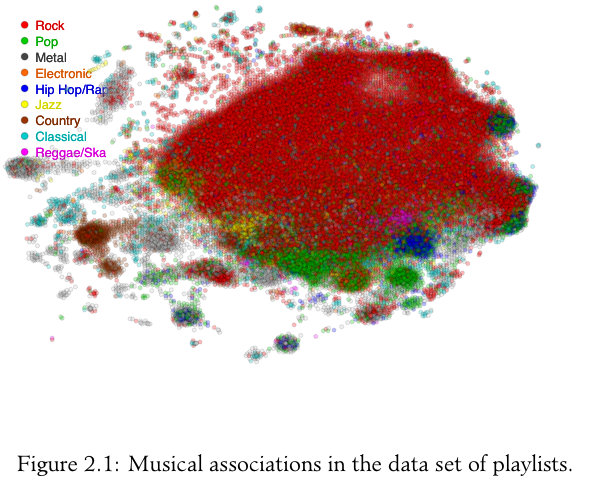
Poolcasting additionally ensures that the played sequence does not repeat the same songs or artists closely and that pairs of consecutive songs ‘flow’ well one after the other, in a musical sense. Good disc jockeys know from expertise which songs sound well in sequence; poolcasting obtains this knowledge from the analysis of playlists shared on the Web. The more two songs occur closely in playlists, the more poolcasting considers two songs as associated, in accordance with the human experiences expressed through playlists. Combining this knowledge and the music profiles of the listeners, poolcasting autonomously generates sequences that are varied, musically smooth and fairly adapted for a particular audience.
A natural application for poolcasting is automating radio programmes. Many online radios broadcast on each channel a random sequence of songs that is not affected by who is listening. Applying poolcasting can improve radio programmes, playing on each channel a varied, smooth and group-customised musical sequence. The integration of poolcasting into a Web radio has resulted in an innovative system called Poolcasting Web radio. Tens of people have connected to this online radio during one year providing first-hand evaluation of its social features. A set of experiments have been executed to evaluate how much the size of the group and its musical homogeneity affect the performance of the poolcasting technique.
I’m quite interested in this topic so it looks like my reading list is set for the week.
The Future of the Music Industry
Posted by Paul in Music, recommendation on November 1, 2009
Last week NPR’s On the Media had a special show called ‘The Future of Music’ – all about the current state of the music industry and where it is all going. The hour is broken into a number of sections:
- Facing the (Free) music – about what has happened in the 10 years since Napster – Yep Spotify gets a mention. Choice quote by Hilary Rosen – “Napster was a missed opportunity’
- They Say That I stole this – about the legalities of sampling (with interviews with Girl Talk among others)
- Played Out – interview with John Scher about the state of live music
- Teens on Tunes – interviews with teens about where they get their music. Answer: Limewire
- Charting the Charts – interesting piece about the charts – the history of billboard, and the next generation of tracking including an interview with Bandmetrics founder Duncan Freeman (way to go Duncan!)
- Why I’m not afraid to take your money – interesting interview with Amanda Palmer about how artists make money in today’s music world
One thing that they didn’t talk about at all was music discovery – no mention of the role of the critic, music blogs, hype machine, no discussion of the role social sites like last.fm play in music discovery, no mention of automated tools for music discovery like recommenders and playlisters. Maybe next year, when everyone has access to infinite music, we’ll see more emphasis on discovery tools.
It was a great show. Highly recommended: NPR’s On the Media Special Edition: The Future of the Music Industry
 Music Machinery