Archive for category The Echo Nest
Hottt or Nottt?
Posted by Paul in code, data, Music, The Echo Nest on December 9, 2009
At the Echo Nest we have lots of data about millions of artists. It can be interesting to see what kind of patterns can be extracted from this data. Tim G suggested an experiment where we see if we can find artists that are on the verge of breaking out by looking at some of this data. I tried a simple experiment to see what we could find. I started with two pieces of data for each artist.
- Familiarity – this corresponds to how well known in artist is. You can look at familiarity as the likelihood that any person selected at random will have heard of the artist. Beatles have a familiarity close to 1, while a band like ‘Hot Rod Shopping Cart’ has a familiarity close to zero.
- Hotttnesss – this corresponds to how much buzz the artist is getting right now. This is derived from many sources, including mentions on the web, mentions in music blogs, music reviews, play counts, etc.
I collected these 2 pieces of data for 130K+ artists and plotted them. The following plot shows the results. The x-axis is familiarity and the y-axis is hotttnesss. Clearly there’s a correlation between hotttnesss and familiarity. Familiar artists tend to be hotter than non-familiar artists. At the top right are the Billboard chart toppers like Kanye West and Taylor Swift, while at the bottom left are artists that you’ve probably never heard of like Mystery Fluid. We can use this plot to find the up and coming artists as well as the popular artists that are cooling off. Outliers to the left and above the main diagonal are the rising stars (their hotttnesss exceeds their familiarity). Here we see artists like Willie the Kid, Ben*Jammin and ラディカルズ (a.k.a. Rock the Queen). While artists below the diagonal are well known, but no longer hot. Here we see artists like Simon & Garfunkel, Jimmy Page and Ziggy Stardust. Note that this is not a perfect science – for instance, it is not clear how to rate the familiarity for artist collaborations – you may know James Brown and you may know Luciano Pavarotti, but you may not be familiar with the Brown/Pavarotti collaboration – what should the familiarity of this collaboration be? the average of the two artists, or should it be related to how well known the collaboration itself is? Hotttnesss can also be tricky with extremely unfamiliar artists. If a Hot Rod Shopping Cart track gets 100 plays it could substantially increase the band’s hotttnesss (‘Hey! We are twice as popular as we were yesterday!’)
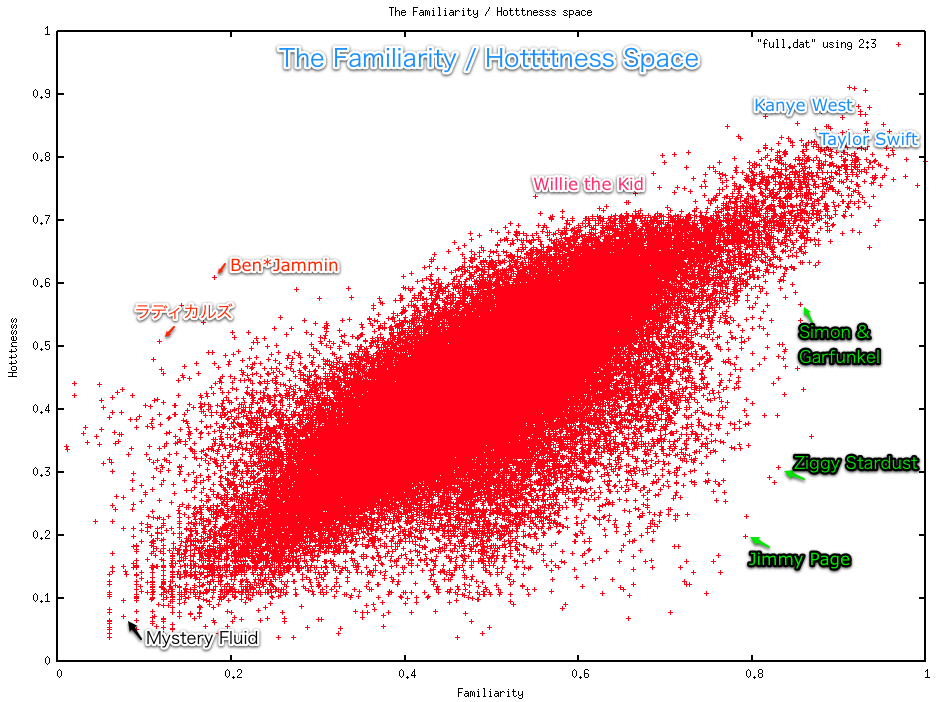 Despite these types of confounding factors, the familiarity / hotttnesss model still seems to be a good way to start exploring for new, potentially unsigned acts that are on the verge of breaking out. To select the artists, I did the simplest thing that could possibly work: I created a ‘break-out’ score which is simply ratio of hotttnesss to familiarity. Artists that have a high hotttnesss as compared to their familiarity are getting a lot of web buzz but are still relatively unknown. I calculated this break-out score for all artists and used it to select the top 1000 artists with break-out potential, as well as the bottom 1000 artists (the fade-aways). Here’s a plot showing the two categories:
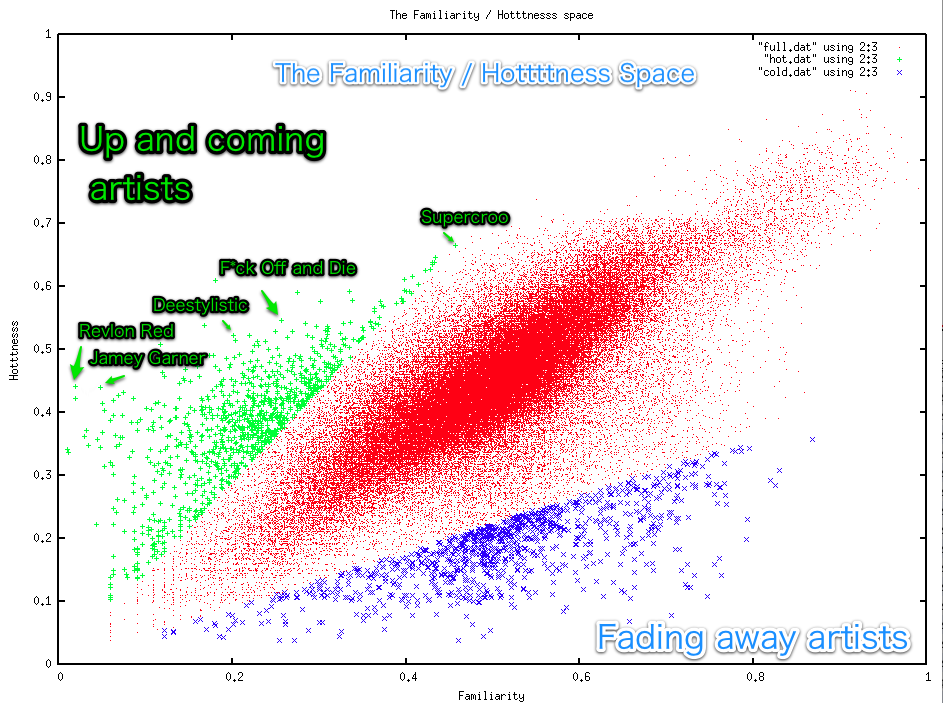
Here are 10 artists with high break-out scores that might be worth checking out:
- Ben*Jammin – German pop, with 249 Last.fm listeners with an awesome youtube video (really, you have to watch it)
- Lord Vampyr’s Shadowsreign – 32 Last.fm listeners – I’m not sure whether they are being serious or not in this video.
- Waking Vision Trio – 429 Last.fm Listeners – on youtube
- The Bart Crow Band – alt-country – 3K last.fm listeners – youtube
- Urine Festival – 500 last.fm listeners – really, not for the faint of heart – youtube
- Fictivision vs Phynn – 250 Last.fm listeners – trance – youtube
- korablove – 1,500 Last.fm listeners – minimal, deep house – youtube
- Deelstylistic – 1,800 Last.fm listeners – r&b – youtube
- Luke Doucet and the White Falcon – 900 Last.fm listeners – youtube
- i-sHiNe – 1,700 Last.fm listeners – on youtube
Rage against the pop machine this xmas
Posted by Paul in fun, Music, remix, The Echo Nest on December 5, 2009
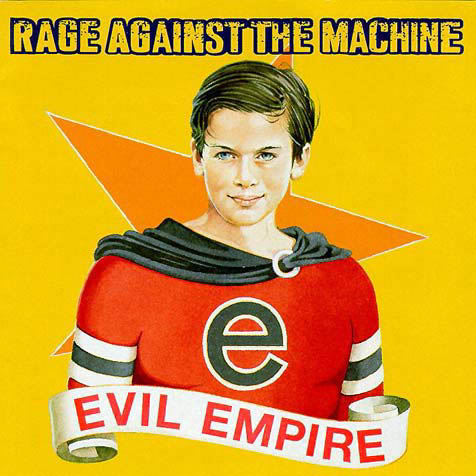 There’s a movement this year to take back the Christmas charts from smarmy pop artists churned out by music factories like the X factor and Idol franchises. The kickoff to this movement is this exhortation posted in the ‘Rage Against the machine for Xmas #1‘ Facebook group:
Fed up of Simon Cowell’s latest karaoke act being Christmas No.1?
Me too… So who’s up for a mass-purchase of the track ‘KILLING IN THE NAME’ from December 13th (DON’T BUY IT YET!) as a protest to the X-Factor monotony?
The group already has nearly 150K members and has received press coverage in stereoboard, nme, Drownedinsound and BritishMusicScene.
Now ‘Killing in the name’ isn’t exactly your typical Christmas song, so to help get people into the spirit of the projects I thought I would try to make the song be a bit more appealing to those with traditional Christmas music sensibilities. And so, I fired up the Echo Nest Jingler and generated a Christmas version of ‘Killing in the Name’. (The Jingler is a bit of software that will Xmas-ify any song by automatically adding sleigh bells, signal bells and the occasional Santa-ho). Here are the results:
This is just to get you in the Rage against Christmas mood. Remember to buy the track on December 13.
From Nickelback to Bickelnack
I saw that Nickelback just received a Grammy nomination for Best Hard Rock Performance with their song ‘Burn it to the Ground’ and wanted to celebrate the event. Since Nickelback is known for their consistent sound, I thought I’d try to remix their Grammy-nominated performance to highlight their awesome self-similarity. So I wrote a little code to remix ‘Burning to the Ground’ with itself. The algorithm I used is pretty straightforward:
- Break the song down into smallest nuggets of sound (a.k.a segments)
- For each segment, replace it with a different segment that sounds most similar
I applied the algorithm to the music video. Here are the results:
Considering that none of the audio is in its original order, and 38% of the original segments are never used, the remix sounds quite musical and the corresponding video is quite watchable. Compare to the original (warning, it is Nickelback):
Feel free to browse the source code, download remix and try creating your own.
Boston Music Hack Day is in the can.
Posted by Paul in Music, The Echo Nest on December 1, 2009
I’ve almost recovered from the Boston Music Hack Day. Here’s a retrospective of posts, tweets video and images about the event. First, lots of people have written about their experiences at the hack day. Here’s a sampling:
- It Rocked! – Anthony Volodkin’s write up.
- Brian Whitman on Music Hack Day
- Circuit Bending for Sound’s sake – focuses on the hardware hacks
- Save the Robot – Boston Music Hackday: Links round-up –
- Hacking Crush: Music Hack Day Boston
- The future of music application development: trimutiny
- Zed equals zee: the art of the noise
- Dysonsound – debating the future of music
- Dave Haynes: Music Hack Day Boston (the snowball grows)
- Ben Ward : Yahoo! Developer Network Blog
- François Maillet’s blog which includes one of my favorite hackday photos:

- Music Hack Day: ‘A Dungeons & Dragons conference for music geeks’
- Francis wins iPhone category at Boston Music Hack Day
- Things I learned about organizing a hack day
- Grant Cerny’s post
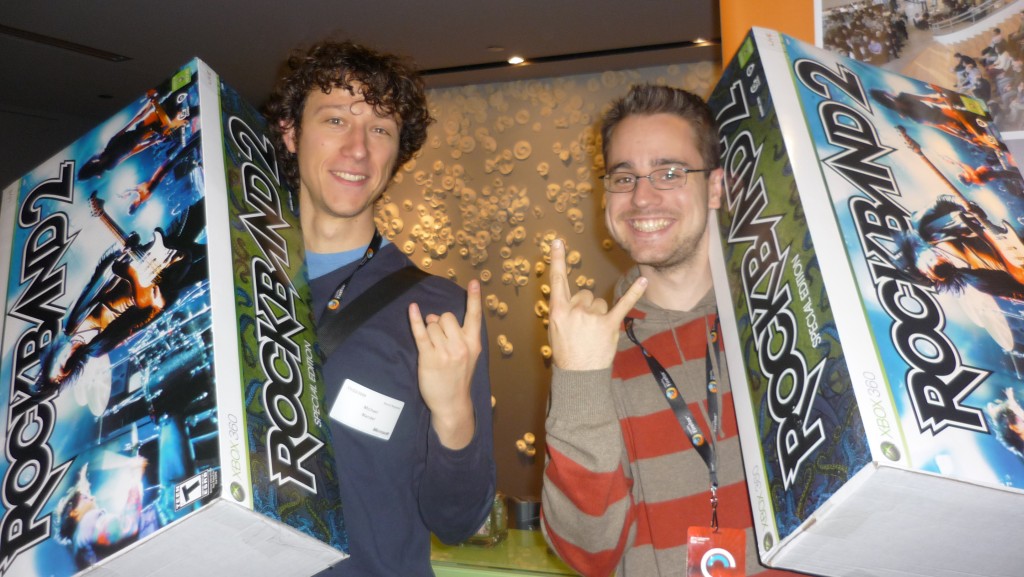
Some Videos:
Ian Hogarth from Songkick:
Bodega Girls at the Echo Nestival
Photos:

Click for slide show
Lots of friendly tweets too.
The Spotified Billboard Charts – now with real playlists
Posted by Paul in java, playlist, The Echo Nest on December 1, 2009

Last month I Spotified the Billboard charts by using the Billboard and Spotify APIs. However, I wasn’t actually able to create real Spotify playlists since the Spotify web API doesn’t allow creating or manipulating playlists. But now I’m a premium Spotify user and as a premium user I can use the libspotify / despotify API to do just about anything that the official Spotify client can do. With my new found Spotify superpower, I revamped my Billboard charts creator to create real Spotify playlists:
The Spotified Billboard Singles Charts
Instead of having to click on every song to listen to it, just click on the chart – this will open the Spotify playlist – hit play and you’ll be in Billboard chart heaven (or hell, depending on your music taste).
To interact with Spotify I used Jotify – a Java client library (based on despotify) for Spotify. Jotify is well written, full featured library written by Felix Bruns (who has been extremely helpful in answering my questions). I highly recommend Jotify.
A Singular Christmas
Posted by Paul in fun, Music, The Echo Nest on November 30, 2009
Oh lookie – Brian has re-posted his Singular Christmas
Visualizing the Artist Space
Posted by Paul in events, research, The Echo Nest, visualization on November 26, 2009
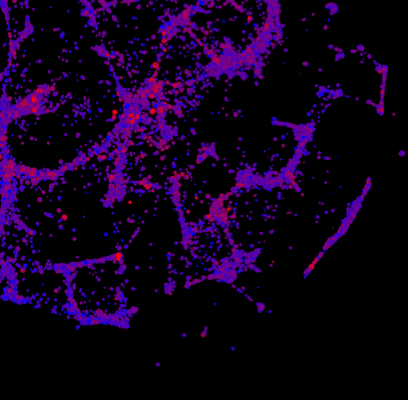
Take a look at Kurt’s weekend hack to make a visualization of the Echo Nest artist similarity space. Very nice. Can’t wait for Kurt to make it interactive and show artist info. Neat!
Things I learned about organizing a hack day
Posted by Paul in events, Music, The Echo Nest on November 24, 2009
Boston Music Hack Day is in the can. I learned a lot over the last few days about what happens when you have 200+ programmers gather for a weekend. Here’s some of the things I want to remember for next time:
- Plan for no-shows – when the event is free, there will be some people who sign up, but then, for whatever reason will not show up. We had lots of people on the waiting list that could have attended if we had anticipated the no-shows.

No-shows should be sitting in these empty seats
- Buy Less Food – When people are up all night coding, they tend to skip breakfast. We had breakfast for 250 on Sunday, we probably only needed breakfast for 100.

- Late-night hacking with beer and music can be quite productive

Late-night hacking at the Hack Nest
- Have dueling projectors – when you have 35 demos to show, plug in time can add a half hour to a 2 hour demo session. (By the way, thanks to the good Samaritan ubergeek who volunteered to help the presenters get the video (someone tell me who it was)).

- Work with awesome people – Working Jon and Dave was great, but there was also an incredible behind-the-scenes team making the Hack Day possible. We had an awesome set of volunteers who gave their weekend to making the hack day possible. Here are some of them:

See the guy in the back with the cap? That’s Matthew Santiago – he was a non-stop hack day machine – from moving food for 300, organizing registration, handling and chauffeuring the Echo Nestival talent. He worked from 7AM Saturday morning to 7PM Sunday evening with about an hour of sleep.
The secret weapon of the hack day was Elissa – Director of Stuff at the Echo Nest- she managed so many details from booking the Echo Nestival, renting vans, carting food, finding volunteers, photoshopping badges, getting tee-shirts made, dealing with press, photographers, CEOs, and Founders, ordering tables and chairs for the Hack nest, wrangling sponsors, picking menus, ordering food, getting swag, making extra bathroom keys, hand delivering the excess food to the local homeless shelter and so much more. Elissa quietly managed all of the big and little details that I never would have thought of. If you attended the hack day, be sure to give her some twitter love.
I learned a lot over the weekend about events and organizing. I hope I get to be involved in more hack days in the future so I can use my new knowledge.
Photos by Dave Haynes
Searching for beauty and surprise in popular music
Posted by Paul in events, Music, The Echo Nest on November 23, 2009
During the Boston Music Hack Day, 30 or 40 music hacks were produced. One phenomenal hack was Rob Ochshorn’s Outlier FM. Rob’s goal for the weekend was to utilize technology to search for beauty and surprise in even the most overproduced popular music. He approached this problem by searching musical content for the audio that “exists outside of a song’s constructed and statistical conventions”.
With Outlier FM rob can deconstruct a song into musical atoms, filter away the most common elements, leaving behind the non-conformist bits of music. This yields strange, unpredictable minimal techno-sounding music.
So how does it work? Well, first Outlier FM uses the Echo Nest analyzer to break a song down into the smallest segments. You can then visualize these segments using numerous filters and layout schemes to give you an idea of what the unusual audio segments are:
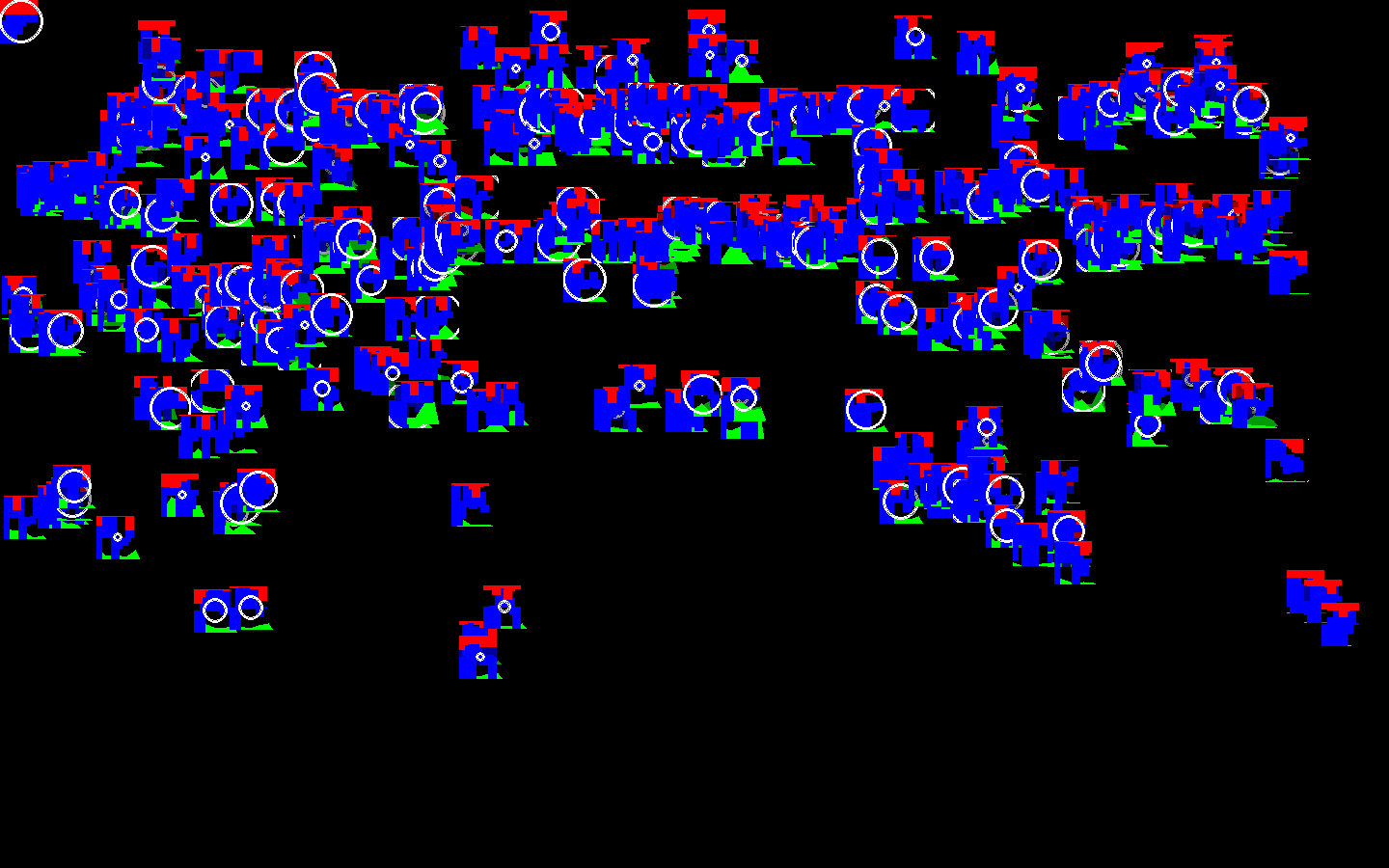
Next, you can filter out clusters of self-similar segments, leaving just the outliers:

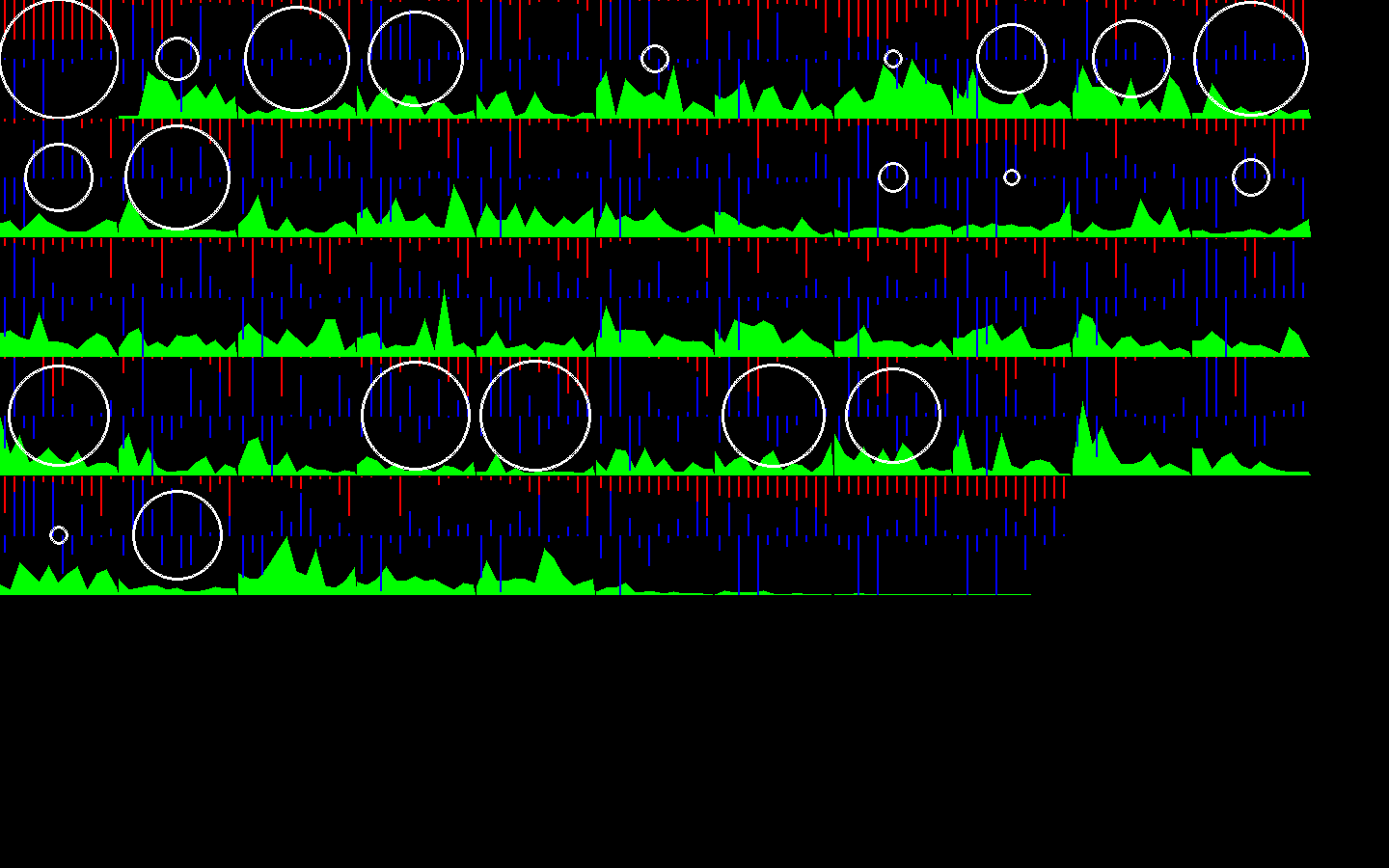
Finally you can order, visualize and render that segments to yield interesting music:
Here’s an example of Outlier FM applied to Here’ Comes the Sun:
Rob’s hack was an amazing weekend effort, he combined music analysis and visualization into a tool that can be used to make interesting sounds. Outlier.fm was voted the best hack for the music hack day weekend. Rob chose as his prize the Sun Ultra 24 workstation with flat panel display donated by Sun Microsystems Startup Essentials. Here’s Rob receiving his prize from Sun.
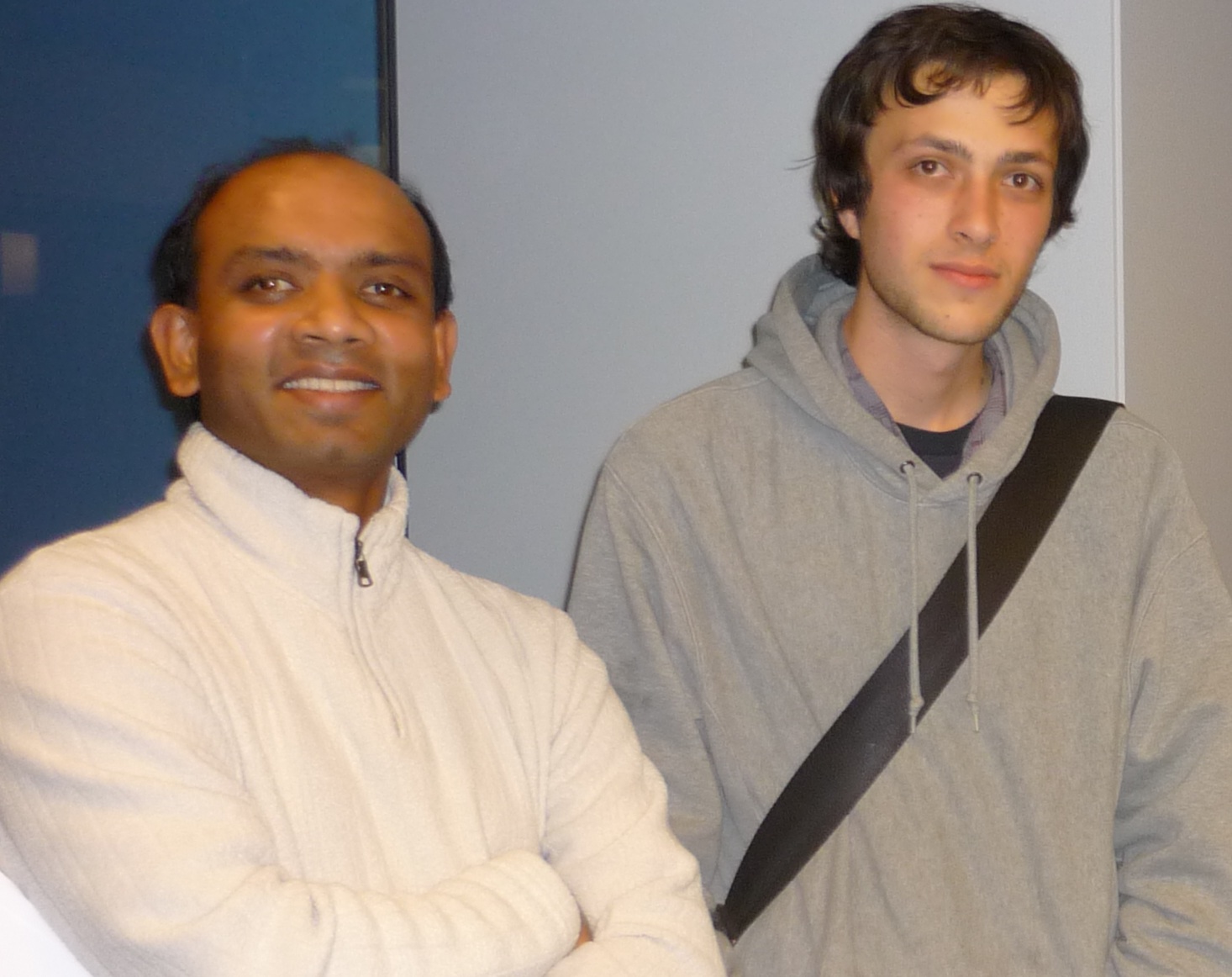
Congrats to Rob for a well done hack!
Paul’s Music Wreckommender
Posted by Paul in events, Music, playlist, The Echo Nest on November 22, 2009
I just posted my music hack day hack. It is called Paul’s Music Wreckommender. Use this Wreckommender to find anti-recommendations. Give the wreckommender an artist that you like and it will give you a playlist of tracks from artists that are very different from the seed artist. Some obvious use cases:
- Your 14 year old daughter’s slumber party is getting too loud. Send the girls home by putting on the Hannah Montana Wreckommender – which yields a playlist with tracks by Glenn Gould, Dream Theater and Al Hirt.
- It’s time to break up with your girl friend. Give her the ‘You are the wind beneath my wings‘ wrecklist and your intentions will be clear.
- If you like ‘everything but country’ then Garth Williams will guide the way: Garth Williams Wreckommendations
You can try it out at Wreckommender.com.
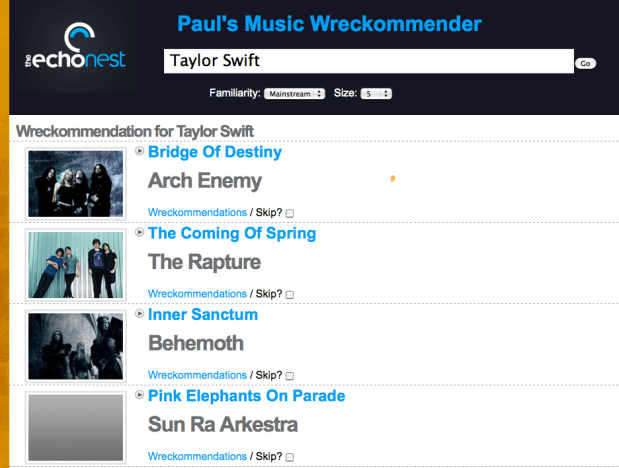
How it works:
This was a pretty easy hack. I already had a playlister engine with some neat properties. It maintains a complete artist graph using Echo Nest artist similarities, so I can make make routes through the artist space for making smooth artist/song transitions. Adapting this playlister engine to create wreckommendations was really easy. To create the recommendations, I find the seed node in the graph and then from this node I find the set of artists that have the longest ‘shortest path’ to the seed artist. These are the artists that are furthest away from the seed artists. I then select songs from this set to make my ‘wrecklist’. However, this list isn’t the best list. There are a small set of artists that are far away from everything. These artists become frequent wrecommendations for many many artists, which is bad. To avoid this problem I adapted the algorithm to find far away artist clusters and then draw artists from that cluster. This gives yields a playlist with much more variety.
This hack is primarily for fun, but I think there’s something in the wreckommendations that is worth persuing. When asked to describe their taste in music, many people will use a negative – such as “Anything but country and rap”. If this is really the case, then using the wreckommender to literally find ‘anything but country and rap’ – whether it is J-Pop or crabcore might actually be useful.
Inspiration
A couple of sources of inspiration for this hack. First, the name. A word like ‘wreckommendation’ clearly deserves an application. Second, a coffee pot conversation with Reid, and finally, the LibraryThing Unsuggester, which does a similar thing for books (but in a very different way).
I hope you like the wreckommender, let me know if you find any interesting wreckommendations.
 Music Machinery