Archive for category Music
Jennie’s ultimate road trip
Posted by Paul in code, fun, Music, The Echo Nest on October 20, 2010
Last weekend at Music Hack Day Boston, I teamed up with Jennie, my 15-year-old daughter, to build her idea for a music hack which we’ve called Jennie’s Ultimate Road Trip. The hack helps you plan a road trip so that you’ll maximize the number of great concerts you can attend along the way. You give the app your starting and ending city, your starting and ending dates, and the names of some of your favorite artists and Jennie’s Ultimate Road Trip will search through the many events to find the ones that fit your route schedule that you’d like to see and gives you an itinerary and map.
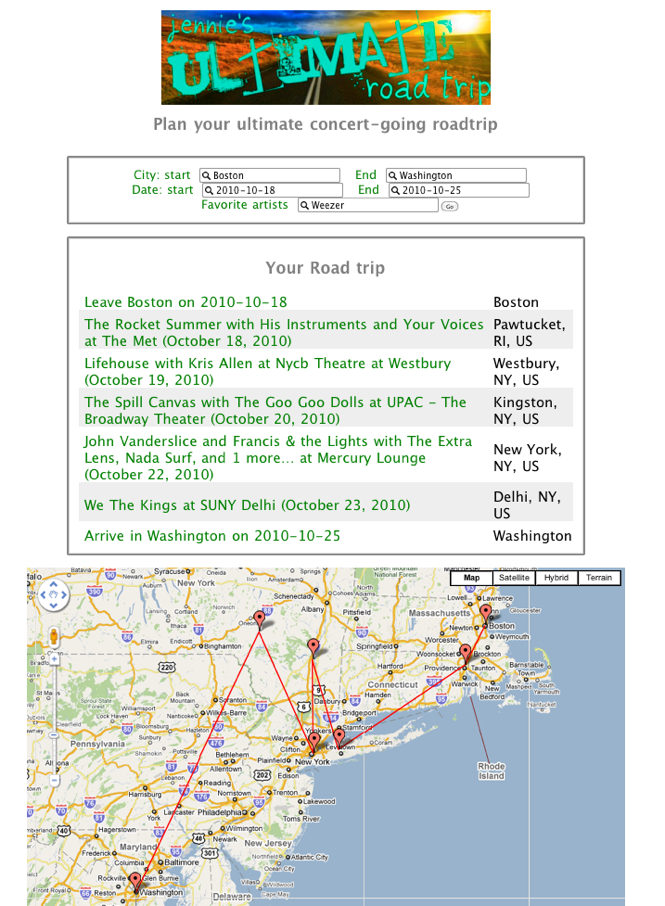
We used the wonderful SongKick API to grab events for all the nearby cities. I was quite surprised at the how many events SongKick would find. For just a single week, in the geographic area between Boston and New York City, SongKick found 1,161 events with 2,168 different artists. More events and more artists makes it easier to find a route that will give a satisfying set of concerts – but it can also make finding a route a bit more computationally challenging too (more on that later). Once we had the set of possible artists that we could visit, we needed to narrow down the list of artists to the ones would be of most interest to the user. To do this we used the new Personal Catalogs feature of the Echo Nest API. We created a personal catalog containing all of the potential artists (so for our trip to NYC from Boston, we’d create a catalog of 2,168 artists). We then used the Echo Nest artist similarity APIs to get recommendations for artists within this catalog. This yielded us a set of 200 artists that best match the user’s taste that would be playing in the area.
The next bit was the tricky bit – first, we subsetted the events to just include events for the recommended set of artists. Then we had to build the optimal route through the events, considering the date and time of the event, the preference the user has for the artist, whether or not we’ve already been to an event for this artist on the trip, how far out of our way the venue is from our ultimate destination and how far the event is from our previous destination. For anyone who saw me looking grouchy on Sunday morning during the hack day it was because it was hard trying to figure out a good cost function that would weigh all of these factors: artist preference, travel time and distance between shows, event history. The computer science folks who read this blog will recognize that this route finding is similar to the ‘travelling salesman problem‘ – but with a twist, instead of finding a route between cities, which don’t tend to move around too much, we have to find a path through a set of artist concerts where every night, the artists are in different places. I call this the ‘travelling rock star’ problem. Ultimately I was pretty happy with how the routing algorithm, it can find a decent route through a thousand events in less than 30 seconds.
Jennie joined me for a few hours at the Music Hack Day – she coded up the HTML for the webform and made the top banner – (it was pretty weird to look over on her computer and see her typing in raw HTML tags with attached CSS attributes – kids these days). We got the demo done in time – and with the power of caching it will generate routes and plot them on a map using the Google API. Unfortunately, if your route doesn’t happen to be in the cache, it can take quite a bit of time to get a route out of the app – gathering events from SongKick, getting the recommendations from the Echo Nest, and finding the optimal route all add up to an app that can take 5 minutes before you get your answer. When I get a bit of time, I’ll take another pass to speed things up. When it is fast enough, I’ll put it online.
It was a fun demo to write. I especially enjoyed working on it with my daughter. And we won the SongKick prize, which was pretty fantastic.
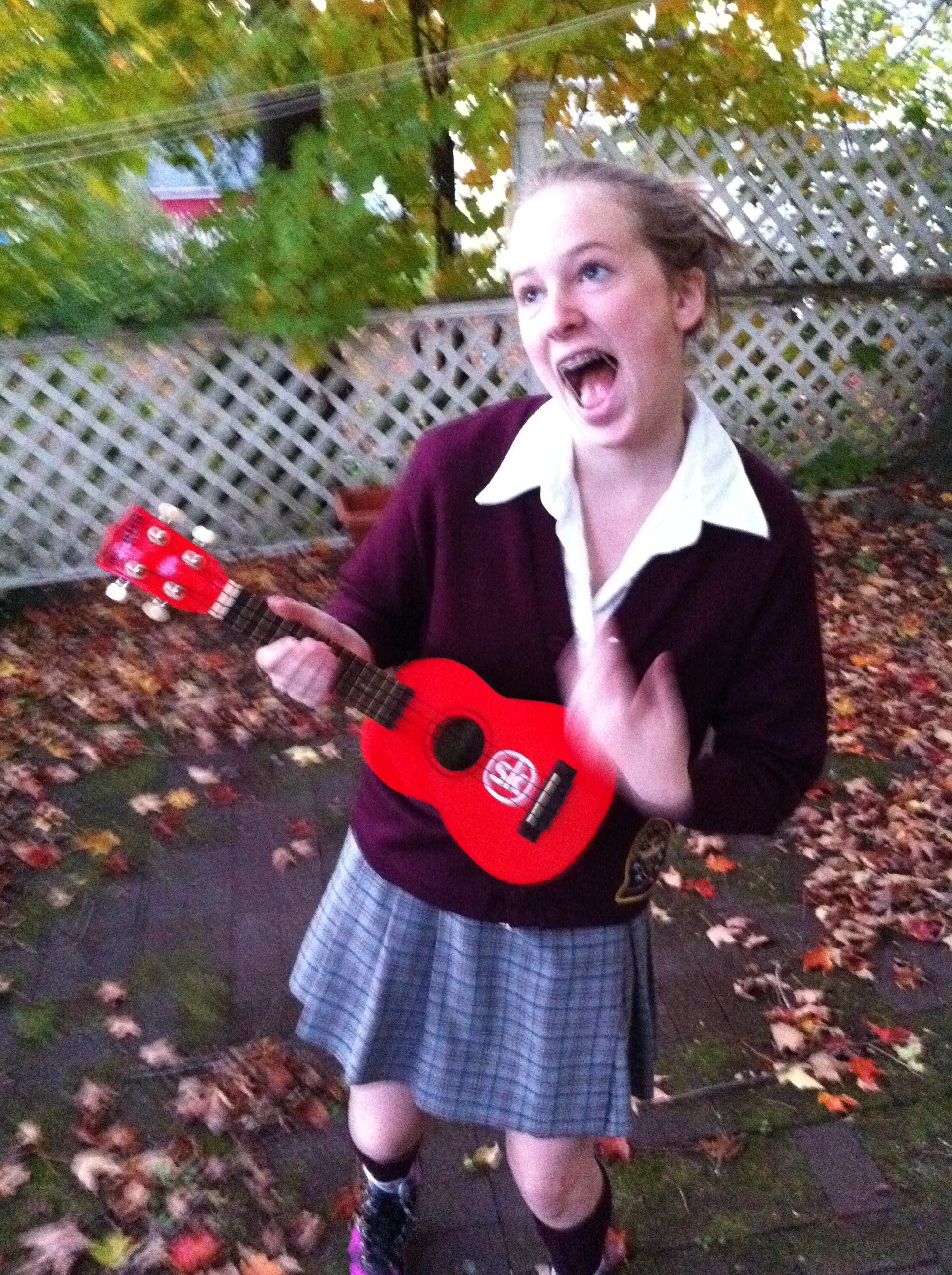
Jennie with the SongKick prize
Great Caesars’ Ghost!
Posted by Paul in Music, The Echo Nest on October 18, 2010
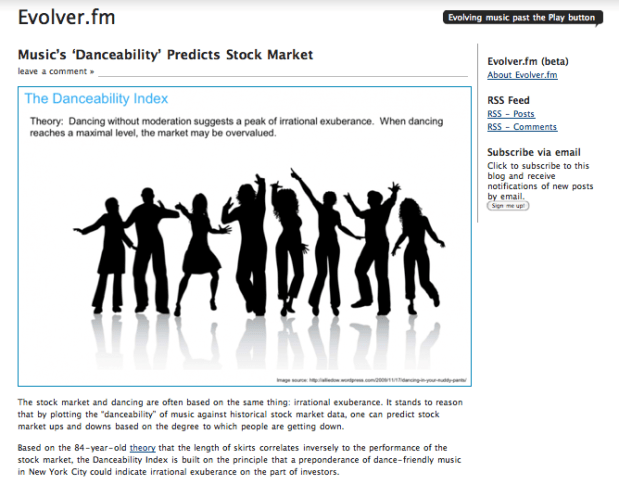
The Echo Nest now has an official Editor in Chief. Eliot Van Buskirk has joined the Echo Nest staff. He’s writing about music apps at Evolver.fm. He already has a whole bunch of great writeups about Music Hack Day Boston and all of the projects that have come out of it. Check it out: evolver.fm
The Echo Nest gets Personal
Posted by Paul in code, Music, playlist, recommendation, remix, The Echo Nest, web services on October 15, 2010
Duke University Archives
Here at the Echo Nest just added a new feature to our APIs called Personal Catalogs. This feature lets you make all of the Echo Nest features work in your own world of music. With Personal Catalogs (PCs) you can define application or user specific catalogs (in terms of artists or songs) and then use these catalogs to drive the behavior of other Echo Nest APIs. PCs open the door to all sorts of custom apps built on the Echo Nest platform. Here are some examples:
Create better genius-style playlists – With PCs I can create a catalog that contains all of the songs in my iTunes collection. I can then use this catalog with the Echo Nest Playlist API to generate interesting playlists based upon my own personal collection. I can create a playlist of my favorite, most danceable songs for a party, or I can create a playlist of slow, low energy, jazz songs for late night reading music.
Create hyper-targeted recommendations – With PCs I can make a catalog of artists and then use the artist/similar APIs to generate recommendations within this catalog. For instance, I could create an artist catalog of all the bands that are playing this weekend in Boston and then create Music Hack Day recommender that tells each visitor to Boston what bands they should see in Boston based upon their musical tastes.
Get info on lots of stuff – people often ask questions about their whole music collection. Like, ‘what are all the songs that I have that are at 113 BPM?‘, or ‘what are the softest songs?’ Previously, to answer these sorts of questions, you’d have to query our APIs one song at a time – a rather tedious and potentially lengthy operation (if you had, say, 10K tracks). With PCs, you can make a single catalog for all of your tracks and then make bulk queries against this catalog. Once you’ve created the catalog, it is very quick to read back all the tempos in your collection.
Represent your music taste – since a Personal Catalog can contain info such as playcounts, skips, and ratings for all of the artists and songs in your collection, it can serve as an excellent proxy to your music taste. Current and soon to be released APIs will use personal catalogs as a representation of your taste to give you personalized results. Playlisting, artist similarity, music recommendations all personalized based on you listening history.
These examples just scratch the surface. We hope to see lots of novel applications of Personal Catalogs. Check out the APIs, and start writing some code.
The Music Hack Day Boston t-shirt

The design by Jocelyn Petko, modeled by Ben Lacker.

What happens at a Music Hack Day?
So what is a Music Hack Day really like? Here’s a quick rundown of some of the things that will happen at the Music Hack Day.
9AM – 10AM Saturday morning – Registration – hackers start to arrive between 9AM and 10AM for registration.

Welcome to the Microsoft NERD
You get your badge, wander around the venue (which is graciously provided by Microsoft) have a muffin and a cup of coffee and meet up with old friends and / or make new friends.

Smiling faces greet you at MHD Registration

Informal hacking space at the NERD
This is a good time to start scoping around for hacking partners if you think you might need some help building a hack. If you want to get a head start in connecting with other hackers consider posting to the Ideas page on the Music Hack Day Boston Wiki.

Group hacking

Meet interesting people at Music Hack Day
10AM – Opening remarks – someone will walk you through the weekend, and give you an idea of what to expect, and tell you all the important info like where the bathrooms are.

Dave Haynes kicks of Music Hack Day London
10:15 – Lightning pitches – a big part of the Music Hack Day is the sharing of knowledge about various music-related technologies, whether it’s an API, a library, technique, hardware gizmo. During the lightning pitches, everyone who has a technology that they’d like to talk about gives a 60 second description of their technology.

Getting ready for the lightning rounds
11:00 Morning Workshops – The morning workshops are 15 to 20 minute overviews of a particular technology. There may be be 10 to 20 workshops run in a two hour period. Depending on the number workshop, there may be more than one track, so pay attention during the lightning pitches to figure out which workshops you’d like to attend.

Waiting for the workshops to start
Some companies offer prizes to the best hack that uses their technology. If you want to try to win something cool like a concert tickets, an iPad, or some cash, pay attention to the workshops to see who is giving out prizes.

The Echo Nest workshop

The Songkick workshop
1:00PM Lunch time – lunch is free – but don’t let it stop you from hacking.

Eat or hack?
2:00PM Hacking commences – after lunch – formal hacking begins. You have 24 hours to build something cool that is related to music. Hacking will finish up at 2:30PM on Sunday.

Hacking commences
2:00PM Afternoon workshops – In the afternoon, there are some in-depth workshops where you can learn how to build or do something. The workshops (as with everything at the Music Hack Day), is optional, you can chose to attend a workshop or find a quiet spot and work on your hack. Some of the workshops may be scheduled on an ad hoc basis (anyone can put on a workshop, just post a note on the ‘workshops board’). There are 3 hardware oriented workshops, at the Boston Music Hack Day that will give you an opportunity to build or interact with hardware (a rare thing for many of us software types).
Pen plotter & Chiplotle workshop Douglas Repetto and Brian Whitman will show you how to plot your beautiful music visualizations or whatever else on quite possibly the sexiest of all paper output mechanisms — early 1980s HPGL pen plotters! You’ll learn how to use Chiplotle, a Python bridge for live HPGL drawing control, and we’ll have a a few plotters on hand for everyone to use. Plus, there will be plotters available for hacking after the workshop.

More info:
- http://music.columbia.edu/cmc/chiplotle/
- http://www.flickr.com/groups/chiplotle/pool/
- http://www.youtube.com/watch?v=T20-KcCGokU
Electric Eels Workshop
“Electric Eels” workshop – by Noah Vawter – This project introduces a mobile platform for electronic music instruments. It encouragesplaying them more like traditional instruments. The new techniques this project introduces extend the role of electricity generation – Electrical energy for every note comes from its players’ movements.

Atari Punk Console workshop

Jimmie Rodgers will lead a workshop on building Atari Punk Consoles. The Atari Punk Console is a simple synthesizer with a wide range of sounds. It is so named because the sounds generated are similar to those of the early Atari consoles. In this workshop you will learn the basics of the timing circuits used to make these crazy sounds. You will also learn how to solder, and how to change the the sounds with your fingers as the contact, or even using light to make a simple light Theremin.

Jimmie's workshop
All parts and tools included in the costs. Additional parts will be available, so you will be able to customize your APC with lights, touch contacts, photo resistors, etc. You are encouraged to find a fun case for your APC and bring it (cigar box, mint tin, Mr. Potato Head other plastic toy, etc), anything hollow that can hold a deck of cards would do. If you do not have a case, then Altoid tins will be available at the workshop.

Hardware hacking
6PM – Dinner – At 6PM the pizzas arrive. Get a slice or two and some soda (the beer comes later), and get back to your hack. Remember, eating and sleeping is for the weak

Eating is for the weak
9:30 PM – Leg stretching time. – Hacking continues until around 9:30 PM when the Microsoft NERD will close. At that point hacking shifts to the Echo Nest (a few T stops away).

Onto the T to get to the Echo Nest
10:00 PM Hacking Continues at the Echo Nest
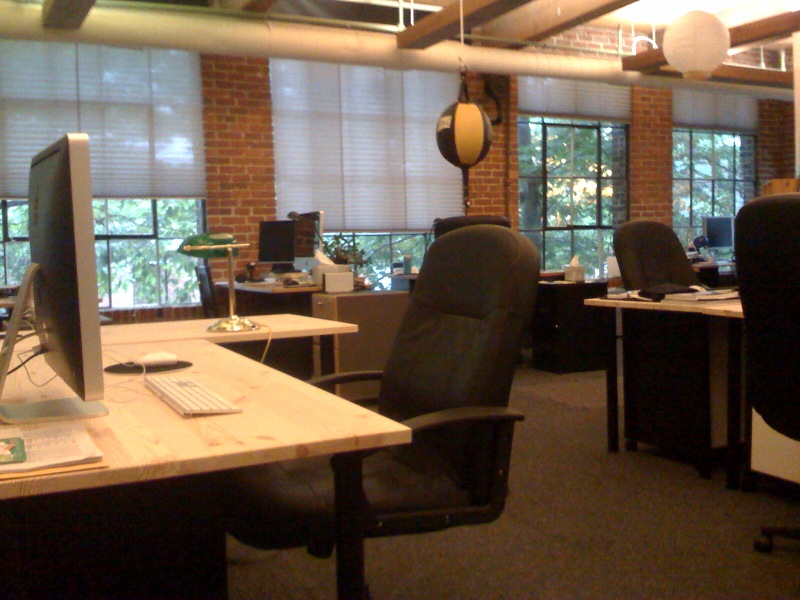
The Echo Nest offices
The venue for overnight hacking is at the Echo Nest in Davis Square – 4 stops away on the T from the main venue. At the Echo Nest there will be some beer, some live music provided by Javelin, and plenty of comfortable hacking space for the hardcore hackers.


Late night hacking
Overnight hacking is where all the magic happens.

Overnight hacking in London

Overnight hacking at the Echo Nest
8AM Sunday Morning – On Sunday morning, hacking finishes up at the Echo Nest and will return to the Microsoft NERD at 9AM, where you’ll find some more coffee and light breakfast. Hacking continues thorough lunch.

Remember, eating is for the weak.
2:30 PM Hacking finishes. By 2:30 PM you should have information about your hack posted to the wiki. Only hacks included on the wiki by 2:30 PM will be included in the final presentations.

Last minute hacking
3:00 PM – Final Demos – This is the time to show your stuff! Once all the hacks are complete, everyone will move to the big room for the hack demos. We’ll be joined by about 100 non-hackers who are here to see all the demos. During the demo time, everyone who managed to get a hack listed onto the hacks wiki by 2:30 will get 2 minutes to present their hack.

Giving a demo - Flight of the bumble bee on guitar
There will be people from the music industry, the press, and the tech world in attendance so it doesn’t hurt to try to make your 2 minutes in the spotlight memorable. We should have two projectors setup so each hack presenter should have 2 minutes to setup and then 2 minutes to present.

Demoing the big piano

Ben demos the roomba recon

Giving good demo is fun
We will be ruthless with the timing. When your 2 minutes are up, we’ll start the next demo, so make sure you get to the point quickly
5:00 PM – final awards – At 5PM the panel of judges will gather to pick the winners of the prizes, and present the awards. But of course, everyone is a winner.

Announcing the prize winners
6:00PM – After all is done, we will find a local pub to get some refreshment.

Time for a beer
It is sure to be a good time.
Photos from flickr photographers: Elizabeth Thomsen, Dave Haynes, Thomas Bonte, Ben Reyes, Brad Searles, aroscoe, habber, David Noël, imelda, James Wheare, narq,
Music Hackday Boston t-shirt design challenge winner!
We received a dozen or so entries in the 24 hour challenge to design a t-shirt for next week’s Music Hack Day Boston. There were some really fantastic submissions. We’ve chosen a winning design:

The design was created by Jocelyn Petko, a designer from Alburtis, PA. Jocelyn specializes in print, illustration and packaging. Jocelyn’s design life started as a sandwich artist:
If I learned anything from my humble beginnings as a sandwich artist, it is that to craft a successful sandwich, you need the proper ingredients. One can say the same for a successful designer. You start with a dash of talent and skill. You add a dollop of creativity and imagination. Top it off with a generous portion of persistency, with a side of bacon, and you’ve got yourself one delicious designer.
Jocelyn in one of her quieter moments

Thanks to everyone who participated in the challenge. All the designs really were fantastic.
Do you do Music Information Retrieval?
Posted by Paul in code, ismir, Music, music information retrieval, The Echo Nest on September 10, 2010
We’re ramping up hiring at the Echo Nest. We’re looking for good MIR people at different experience levels to help us realize the company’s vision of knowing everything about all music automatically. I would guess that we are the closest analog to ISMIR in the industry– we only do music (audio and text), the base technology is straight out of our dissertations (brian, tristan) and we’re active in conferences and universities. We work with an amazing amount of music data on a daily basis and we sell it to some great people and companies that are changing the face of music.
MIR-background candidates are especially encouraged to apply as long as you have relevant experience and want to work on implementation at a very fast growing startup. These are almost all full time positions in our offices near Boston, MA USA. Even if you’re not graduating for a while let us know if you’re interested now.
More info at: http://the.echonest.com/company/jobs/
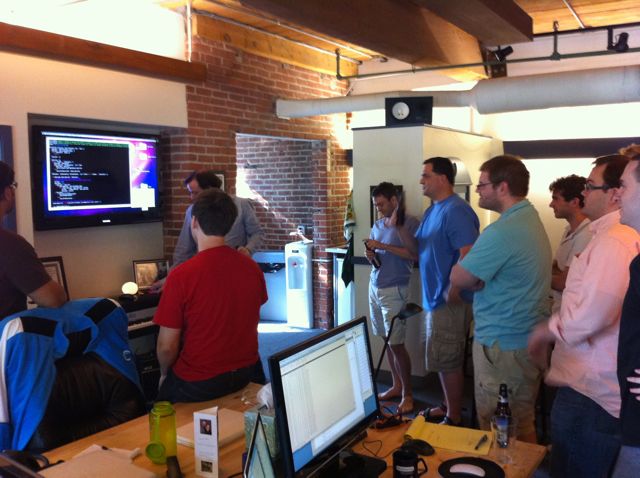
Group coding session at The Echo Nest
Even without Zooey, Music Hack Days are pretty awesome
Posted by Paul in events, Music, The Echo Nest on September 9, 2010

Paul + Matt @ The Hub - Photo by Thomas Bonte
This picture represents the perfection of the Music Hack Day. Here I am sitting at my computer, in a dark room, totally focused on building my hack, while I sit next to the music technology superstar Matt Ogle of Last.fm. In front of me is a beer, a red bull and a glass of Ben Fields‘ private stock. What could be better than this! (Well, I suppose sitting on my right, just out of view could be Zooey Deschanel, that might be better). If you want to find yourself in such a position, then consider signing up for one of the upcoming Music Hack Days. There’s one in Barcelona on October 2,3 and there’s one in Boston on October 16, 17. Registrations are going fast, so sign up early to guarantee that you’ll have a seat.
Last.FM’s Listening clock
Posted by Paul in Music, visualization on September 7, 2010
Nifty new visualization at Last.fm that shows the time of day when you listen to music:


