How good is Google’s Instant Mix?
Posted by Paul in Music, playlist, The Echo Nest on May 14, 2011
 This week, Google launched the beta of its music locker service where you can upload all your music to the cloud and listen to it from anywhere. According to Techcrunch, Google’s Paul Joyce revealed that the Music Beta killer feature is ‘Instant Mix,’ Google’s version of Genius playlists, where you can select a song that you like and the music manager will create a playlist based on songs that sound similar. I wondered how good this ‘killer feature’ of Music Beta really was and so I decided to try to evaluate how well Instant Mix works to create playlists.
The Evaluation
Google’s Instant Mix, like many playlisting engines, creates a playlist of songs given a seed song. It tries to find songs that go well with the seed song. Unfortunately, there’s no solid objective measure to evaluate playlists. There’s no algorithm that we can use to say whether one playlist is better than another. A good playlist derived from a single seed will certainly have songs that sound similar to the seed, but there are many other aspects as well: the mix of the familiar and the new, surprise, emotional arc, song order, song transitions, and so on. If you are interested in the perils of playlist evaluation, check out this talk Dr. Ben Fields and I gave at ISMIR 2010: Finding a path through the jukebox. The Playlist tutorial. (Warning, it is a 300 slide deck). Adding to the difficulty in evaluating the Instant Mix is that since it generates playlists within an individual’s music collection, the universe of music that it can draw from is much smaller than a general playlisting engine such as we see with a system like Pandora. A playlist may appear to be poor because it is filled with songs that are poor matches to the seed, but in fact those songs actually may be the best matches within the individual’s music collection.
Evaluating playlists is hard. However, there is something that we can do that is fairly easy to give us an idea of how well a playlisting engine works compared to others. I call it the WTF test. It is really quite simple. You generate a playlist, and just count the number of head-scratchers in the list. If you look at a song in a playlist and say to yourself ‘How the heck did this song get in this playlist’ you bump the counter for the playlist. The higher the WTF count the worse the playlist. As a first order quality metric, I really like the WTF Test. It is easy to apply, and focuses on a critical aspect of playlist quality. If a playlist is filled with jarring transitions, leaving the listener with iPod whiplash as they are jerked through songs of vastly different styles, it is a bad playlist.
For this evaluation, I took my personal collection of music (about 7,800 tracks) and enrolled it into 3 systems; Google Music, iTunes and The Echo Nest. I then created a set of playlist using each system and counted the WTFs for each playlist. I picked seed songs based on my music taste (it is my collection of music so it seemed like a natural place to start).
The Systems
I compared three systems: iTunes Genius, Google Instant Mix, and The Echo Nest playlisting API. All of them are black box algorihms, but we do know a little bit about them:
- iTunes Genius – this system seems to be a collaborative filtering algorithm driven from purchase data acquired via the iTunes music store. It may use play, skip and ratings to steer the playlisting engine. More details about the system can be found in: Smarter than Genius? Human Evaluation of Music Recommender Systems. This is a one button system – there are no user-accessible controls that affect the playlisting algorithm.
- Google Instant Mix – there is no data published on how this system works. It appears to be a hybrid system that uses collaborative filtering data along with acoustic similarity data. Since Google Music does give attribution to Gracenote, there is a possibility that some of Gracenote’s data is used in generating playlists. This is a one button system. There are no user-accessible controls that affect the playlisting algorithm.
- The Echo Nest playlist engine – this is a hybrid system that uses cultural, collaborative filtering data and acoustic data to build the playlist. The cultural data is gleaned from a deep crawl of the web. The playlisting engine takes into account artist popularity, familiarity, cultural similarity, and acoustic similarity along with a number of other attributes There are a number of controls that can be set to control the playlists: variety, adventurousness, style, mood, energy. For this evaluation, the playlist engine was configured to create playlists with relatively low variety with songs by mostly mainstream artists. The configuration of the engine was not changed once the test was started.
The Collection
For this evaluation I’ve used my personal iTunes music collection of about 7,800 songs. I think it is a fairly typical music collection. It has music of a wide variety of styles. It contains music of my taste (70s progrock and other dad-core, indie and numetal), music from my kids (radio pop, musicals), some indie, jazz, and a whole bunch of Canadian music from my friend Steve. There’s also a bunch of podcasts as well. It has the usual set of metadata screwups that you see in real-life collections (3 different spellings of Björk for example). I’ve placed a listing of all the music in the collection at Paul’s Music Collection if you are interested in all of the details.
The Caveats
Although I’ve tried my best to be objective, I clearly have a vested interest in the outcome of this evaluation. I work for a company that has its own playlisting technology. I have friends that work for Google. I like Apple products. So feel free to be skeptical about my results. I will try to do a few things to make it clear that I did not fudge things. I’ll show screenshots of results from the 3 playlisting sources, as opposed to just listing songs. (I’m too lazy to try to fake screenshots). I’ll also give API command I used for the Echo Nest playlists so you can generate those results yourself. Still, I won’t blame the skeptics. I encourage anyone to try a similar A/B/C evaluation on their own collection so we can compare results.
The Trials
For each trial, I picked a seed song, generated a 25 song playlist using each system, and counted the WTFs in each list. I show the results as screenshots from each system and I mark each WTF that I see with a red dot.
Trial #1 – Miles Davis – Kind of Blue
I don’t have a whole lot of Jazz in my collection, so I thought this would be a good test to see if a playlister could find the Jazz amidst all the other stuff.
First up is iTunes Genius
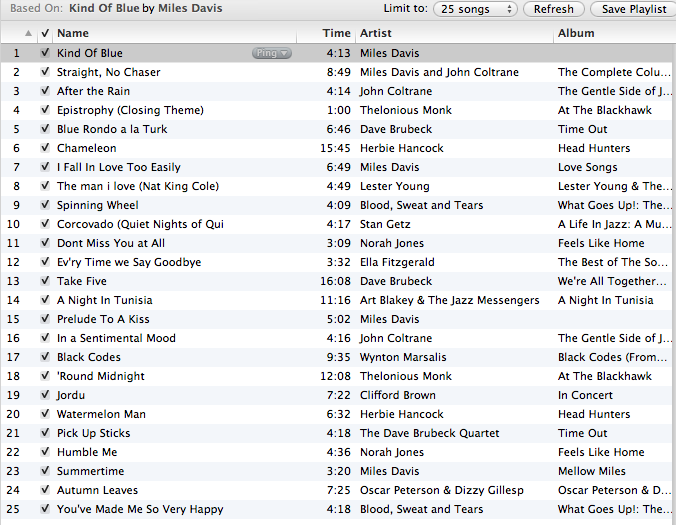
This looks like an excellent mix. All jazz artists. The most WTF results are the Blood, Sweat and Tears tracks – which is Jazz-Rock fusion, or the Norah Jones tracks which are more coffee house, but neither of these tracks rise above the WTF level. Well done iTunes! WTF score: 0
Next up is The Echo Nest.
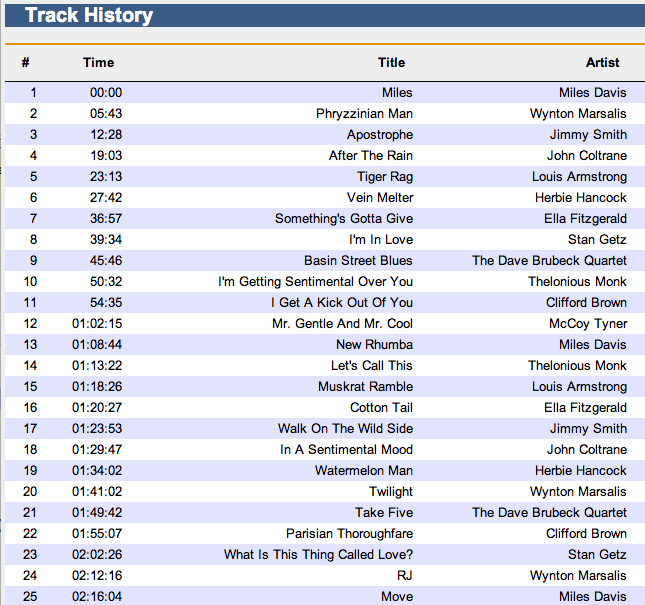
As with iTunes, the Echo Nest playlist has no WTFs, all hardcore jazz. I’d be pretty happy with this playlist, especially considering the limited amount of Jazz in my collection. I think this playlist may even be a bit better than the iTunes playlist. It is a bit more hardcore Jazz. If you are listening to Miles Davis, Norah Jones may not be for you. Well done Echo Nest. WTF score: 0
If you want to generate a similar playlist via our api use this API command:
http://developer.echonest.com/api/v4/playlist/static?api_key=3YDUQHGT9ZVUBFBR0&format=json &limit=true&song_id=SOAQMYC12A8C13A0A8 &type=song-radio&bucket=id%3ACAQHGXM12FDF53542C &variety=.12&artist_min_hotttnesss=.4
Next up is google:
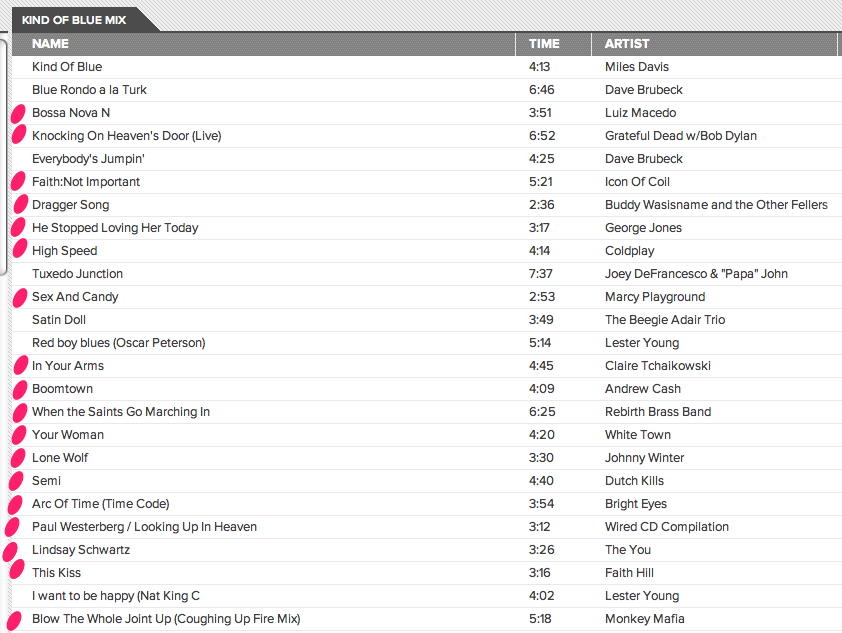
I’ve marked the playlist with red dots on the songs that I consider to be WTF songs. There are 18(!) songs on this 25 song playlist that are not justifiable. There’s electronica, rock, folk, Victorian era brass band and Coldplay. Yes, that’s right, there’s Coldplay on a Miles Davis playlist. WTF score: 18
After Trial 1 Scores are: iTunes: 0 WTFs, The Echo Nest 0 WTFs, Google Music: 18 WTFs
Trial #2 – Lady Gaga – Bad Romance
First up is iTunes:
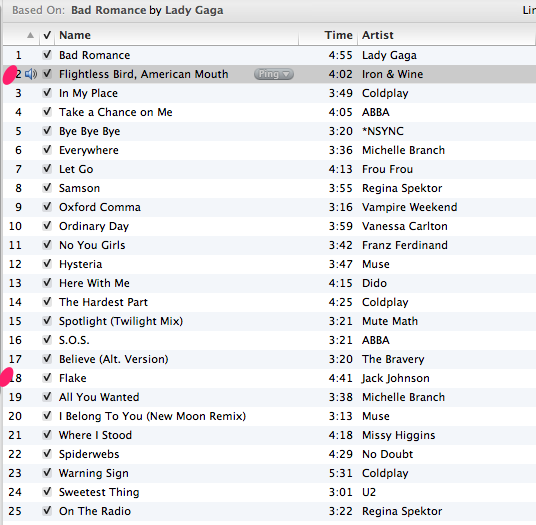
Next up: The Echo Nest
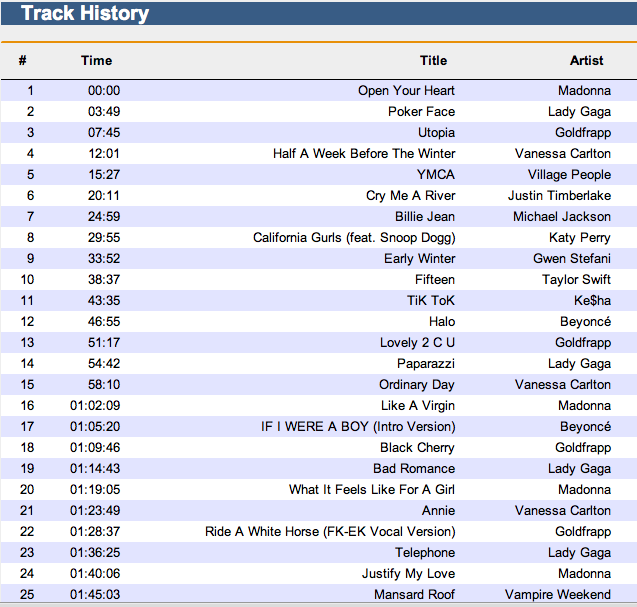
Next up, Google Instant Mix
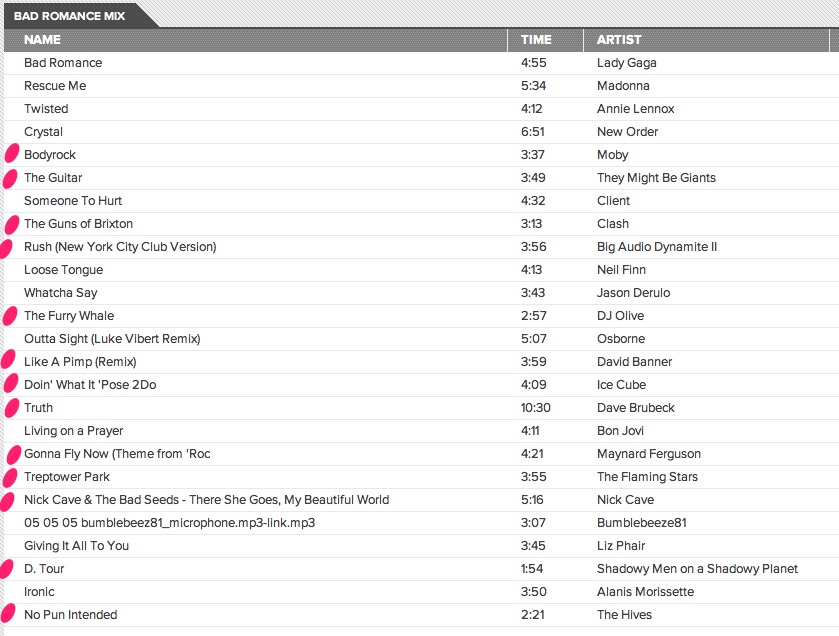
Google’s Instant Mix for Lady Gaga’s Bad Romance seems filled with non sequitur. Tracks by Dave Brubeck (cool jazz), Maynard Ferguson (big band jazz), are mixed in with tracks by Ice Cube and They Might be Giants. The most appropriate track in the playlist is a 20 year old track by Madonna. I think I was pretty lenient in counting WTFs on this one. Even then, it scores pretty poorly. WTF Score: 13
After Trial 2 Scores are: iTunes: 2 WTFs, The Echo Nest 0 WTFs, Google Music: 31WTFs
Trial #3 – The Nice – Rondo
First up: iTunes:
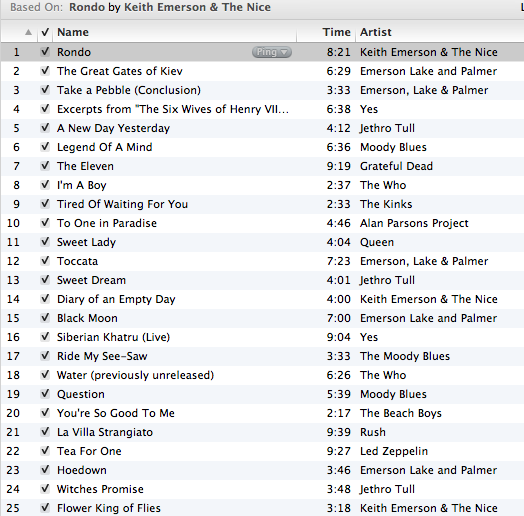
Next up is The Nest:
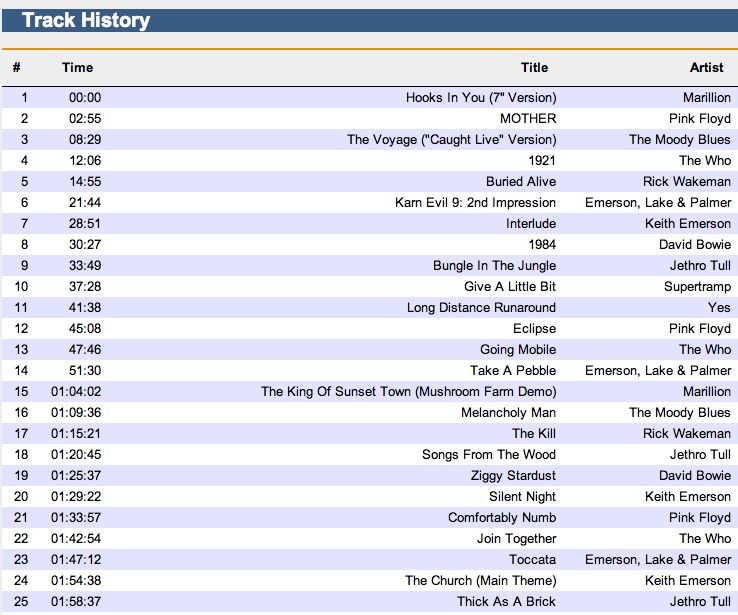
Next up is Google Instant Mix:
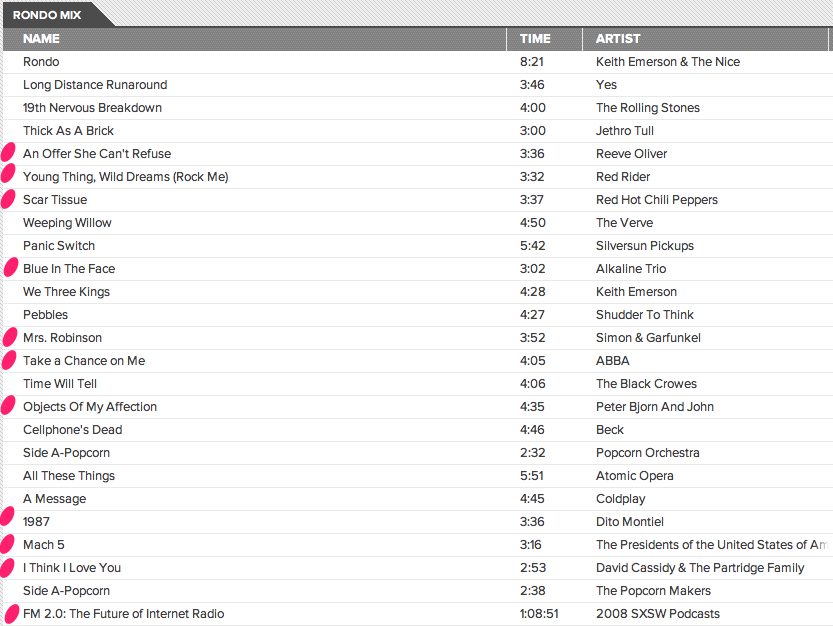
I would not like to listen to this playlist. It has a number songs that are just too far out. ABBA, Simon & Garfunkel, are WTF enough, but this playlist takes WTF three steps further. First offense, including a song with the same title more than once. This playlist has two versions of ‘Side A-Popcorn’. That’s a no-no in playlisting (except for cover playlists). Next offense is the song ‘I think I love you’ by the Partridge family. This track was not in my collection. It was one of the free tracks that Google gave me when I signed up. 70s bubblegum pop doesn’t belong on this list. However,as bad as The Partridge family song is, it is not the worst track on the playlist. That award goes to FM 2.0: The future of Internet Radio’. Yep, Instant Mix decided that we should conclude a prog rock playlist with an hour long panel about the future of online music. That’s a big WTF. I can’t imagine what algorithm would have led to that choice. Google really deserves extra WTF points for these gaffes, but I’ll be kind. WTF Score: 11
After Trial 3 Scores are: iTunes: 2 WTFs, The Echo Nest 0 WTFs, Google Music: 42WTFs
Trial #4 – Kraftwerk – Autobahn
I don’t have too much electronica, but I like to listen to it, especially when I’m working. Let’s try a playlist based on the group that started it all.
First up, iTunes.
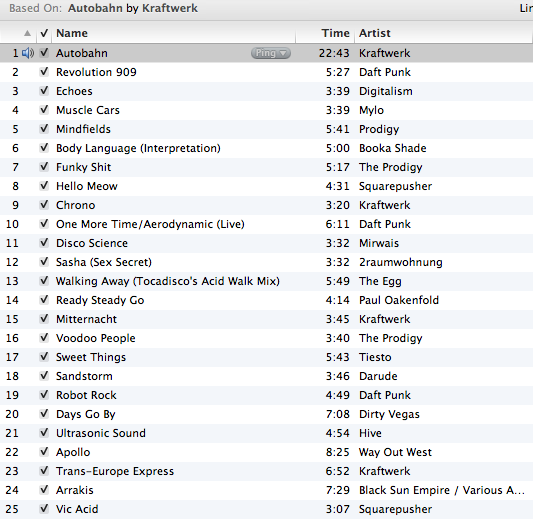
iTunes nails it here. Not a bad track. Perfect playlist for programming. Again, well done iTunes. WTF Score: 0
Next up, The Echo Nest
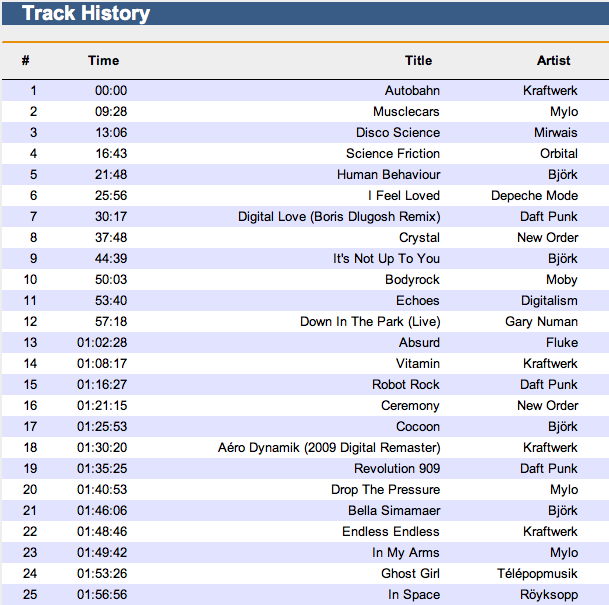
Another solid playlist, No WTFs. It is a bit more vocal heavy than the iTunes playlist. I think I prefer the iTunes version a bit more because of that. Still, nothing to complain about here: WTF Score: 0
Next Up Google
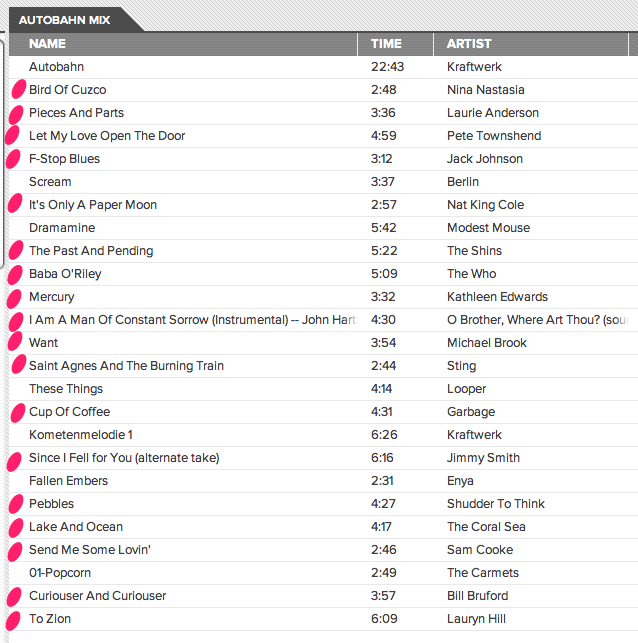
After listening to this playlist, I am starting to wonder if Google is just messing with us. They could do so much better by selecting songs at random within a top level genre than what they are doing now. This playlist only has 6 songs that can be considered OK, the rest are totally WTF. WTF Score: 18
After Trial 4 Scores are: iTunes: 2 WTFs, The Echo Nest 0 WTFs, Google Music: 60 WTFs
Trial #5 The Beatles – Polythene Pam
For the last trial I chose the song Polythene Pam by The Beatles. It is at the core of the amazing bit on side two of Abbey Road. The zenith of the Beatles music are (IMHO) the opening chords to this song. Lets see how everyone does:
First up: iTunes
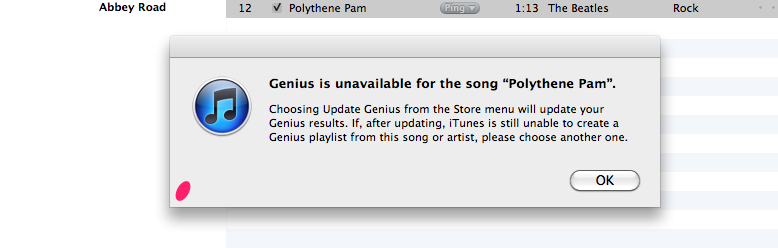
iTunes gets a bit WTF here. They can’t offer any recommendations based upon this song. This is totally puzzling to me since The Beatles have been available in the iTunes store for quite a while now. I tried to generate playlists seeded with many different Beatles songs and was not able to generate one playlist. Totally WTF. I think that not being able to generate a playlist for any Beatles song as seed should be worth at least 10 WTF points. WTF Score: 10
Next Up: The Echo Nest
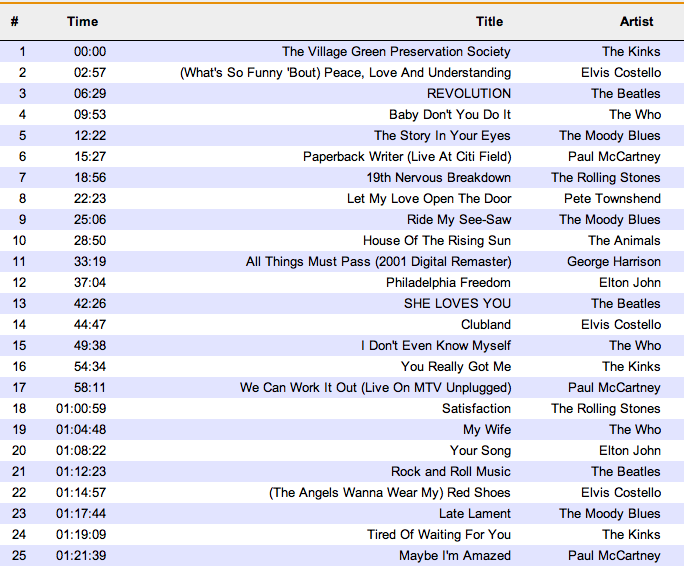
No worries with The Echo Nest playlist. Probably not the most creative playlist, but quite serviceable. WTF Score: 0
Next up Google
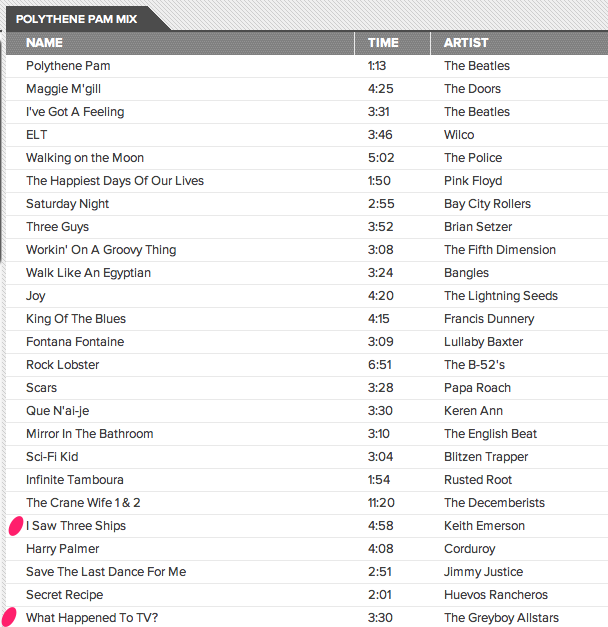
Instant Mix scores better on this playlist than it has on the other four. That’s not because I think they did a better job on this playlist, it is just that since the Beatles cover such a wide range of music styles, it is not hard to make a justification for just about any song. Still, I do like the variety in this playlist. There are just two WTFs on this playlist. WTF Score: 2.
After Trial 5 Scores are: iTunes: 12 WTFs, The Echo Nest 0 WTFs, Google Music: 62 WTFs
(lower scores are better)
Conclusions
I learned quite a bit during this evaluation. First of all, Apple Genius is actually quite good. The last time I took a close look at iTunes Genius was 3 years ago. It was generating pretty poor recommendations. Today, however, Genius is generating reliable recommendations for just about any track I could throw at it, with the notable exception of Beatles tracks.
I was also quite pleased to see how well The Echo Nest playlister performed. Our playlist engine is designed to work with extremely large collections (10million tracks) or with personal sized collections. It has lots of options to allow you to control all sorts of aspects of the playlisting. I was glad to see that even when operating in a very constrained situation of a single seed song, with no user feedback it performed well. I am certainly not an unbiased observer, so I hope that anyone who cares enough about this stuff will try to create their own playlists with The Echo Nest API and make their own judgements. The API docs are here: The Echo Nest Playlist API.
However, the biggest surprise of all in this evaluation is how poorly Google’s Instant Mix performed. Nearly half of all songs in Instant Mix playlists were head scratchers – songs that just didn’t belong in the playlist. These playlists were not usable. It is a bit of a puzzle as to why the playlists are so bad considering all of the smart people at Google. Google does say that this release is a Beta, so we can give them a little leeway here. And I certainly wouldn’t count Google out here. They are data kings, and once the data starts rolling from millions of users, you can bet that their playlists will improve over time, just like Apple’s did. Still, when Paul Joyce said that the Music Beta killer feature is ‘Instant Mix’, I wonder if perhaps what he meant to say was “the feature that kills Google Music is ‘Instant Mix’.”
Bipolar Radio
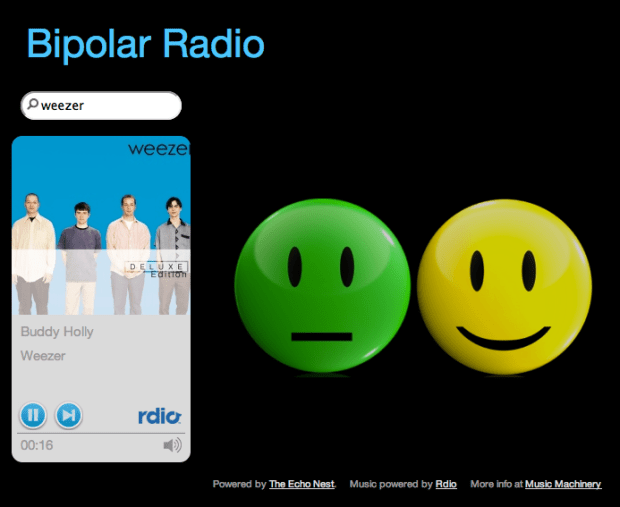
I just finished my hack for Music Hack Day SF. It is called Bipolar Radio. It is your standard Pandora-style artist radio but with a twist. Type in an artist, and you’ll get an endless stream of music by similar artists. When you need to hear a high energy song, just click on the yellow happy face and you’ll instantly hear a high energy song by the currently playing artist. Similarly, if you’d like to chill out, just click on the green face and you’ll instantly hear a low energy song that should help you relax a bit.
The hack uses the Echo Nest song data to help find the high and low energy songs. I use a combination of loudness, energy, danceability, and tempo to sort and filter the songs by an artist into the high and low energy buckets. I’m taking advantage of the new Rdio / Echo Nest integration to get Rdio IDs so I can play them in Rdio’s nifty player.
Give it a whirl and let me know what you think: Bipolar Radio
Music Maze update
One of my more popular music apps in the last few years has been the Music Maze. Since I pushed it on on the web this last December, the maze has hosted about a million unique visitors. It has received lots of great feedback, like:
http://twitter.com/#!/rachelgrayce/statuses/29796528402989056
http://twitter.com/#!/LydiaBrooke/statuses/25070303671492608
Since the Music Maze has received so much love, we thought we give it a bit of buffing and polishing. I’ve just pushed out a new version of the Music Maze with a bunch of nifty features:
A new domain – MusicMaze.fm – no more static.echonest.com/Hard/To/Remember/Url.html. Now the MusicMaze has an easy to remember name.
A professional design – we had a real designer work on the app. It no longer has the ‘made in a weekend’ look to it.
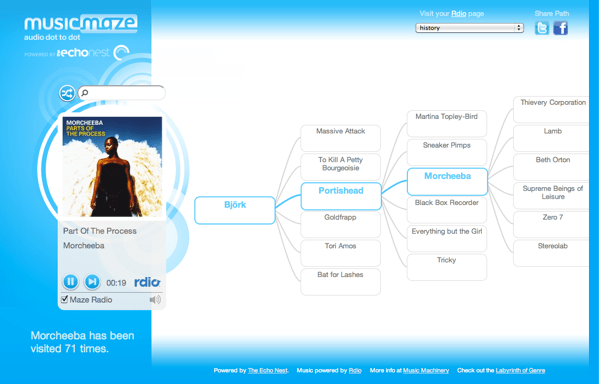
Full stream support with Rdio – the Music Maze now plays music from Rdio (the nifty new social music service). If you are a subscriber to Rdio, (even a free trial subscriber), you can listen to full songs in the new Music Maze. If you are not a subscriber, you get 30 second samples. Working with the Rdio player was a breeze. It was easy to embed and it gives you lots of information about the tracks, making it easy to create a rich listening experience. Note that one downside of this full stream support is that since Rdio is currently a US only music service. The Music Maze won’t play in non-US locales.
Maze Radio – now that the Music Maze can support playing full tracks, it makes a good music player. You can find an area in the maze that contains music you like, check the ‘Maze Radio’ box, and you’ll get a continuous playlist of music as you automatically wander through the maze. If you don’t like what you are hearing, you can click on the maze to direct the player toward music that you like. It is like Pandora radio except that you have more control over where you go next. Maybe I should call it Theseus to keep the Greek Mythology in music apps meme alive.
Social Media Sharing – with the new Music Maze you can create paths through the maze and share these paths via Twitter and Facebook. When you share a path, the path is built step wise in the app, with a nifty animation.
http://twitter.com/#!/plamere/status/65763513875968000
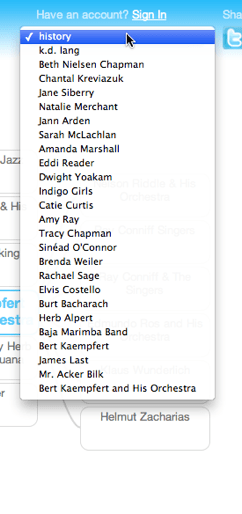
History – if you get lost in the maze, you can delve into your history to get your bearings.
Other bits – I’ve made the app a bit more friendly. For instance, it no longer plays music on page load, gives you some audio controls like mute, pause and next. Instead of starting with Weezer all the time, picks the last artist you visited, or a current hot artist as your starting point. I also keep tracks of how often a particular artist has been visited so you can see when you are the first person to find a particular artist in the maze. So far over 21K unique artists have been found in the Music Maze.
I’d love to get feedback on the new design, so feel free to comment here about what you like and don’t like about the upgrade.
Improve the Kindle by removing this feature
As any Kindle-owning traveler knows, there’s that dreaded moment when the flight attendant announces “at this time, all laptops, cell phones, iPods, gaming devices, Kindles … anything with an off button must be turned off”. This leaves the Kindle-owning reader with nothing to read except the Sky Mall magazine. Of course many just hide their Kindles in the Sky Mall magazine and continue to read while keeping one eye out for the the attendant. Since I’m a rule follower, I put my device away and spend the next half hour pondering why anyone would need a stainless steel wallet.
The solution to the Kindle-gap on the plane is obvious. Amazon should remove the off button from the Kindle. With the Kindle’s 30 days of reading time, there’s no real need to turn it off. Sure, keep the button and have it turn off the wireless functions, but don’t power down the whole device, keep all the reading functions live. Don’t make me resort to reading that airplane safety card one more time.

Masters of Media » Music visualizations as a means for discovery
Posted by Paul in Music, visualization on April 15, 2011
Nifty blog post by Megan Adams about using music visualization as a means for discovery:
Masters of Media » Music visualizations as a means for discovery.
Megan points to this thread on Tufte’s BBS about Reebee Garofalo’s ‘Genealogy of Pop/Rock Music”:

The comments in the BBS thread point to a number of visualizations that I hadn’t seen before including: this book on Rock Family Trees along with this incredibly detailed view of the Liverpool music scene.
MTV O Music Awards

Jennie with the SongKick prize
This is pretty cool – the hack that my daughter and I built at last fall’s Music Hack Day Boston was nominated for the Best Music Hack in the newly announced MTV O Music Awards – Online, Open, Ongoing Music Awards. Here are more details about the hack: Jennie’s Ultimate Road Trip, which includes this picture of Jennie playing the SongKick Ukelele. Seem’s like Jennie’s secret strategy to meet the Bieber might have some legs.
Other great music hacks were nominated too including the legendary Tim Soo’s Invisible Instruments and Marshall Jones’ Highlight to Listen. You can vote for your favorite music hack.
It is great to see Music Hacks included in a list of music awards. Thanks MTV!
9 reasons why Google and Apple should be worried
Posted by Paul in Music, recommendation on April 4, 2011
 For the last year we’ve heard rumors of how both Apple and Google were getting close to releasing music locker services that allow music listeners to upload their music collection to the cloud giving them the ability to listen to their music everywhere. So it was a big surprise when the first major Internet player to launch a music locker service wasn’t Google or Apple, but instead was Amazon. Last week, with little fanfare, Amazon released its Amazon Cloud Drive, a cloud-based music locker that includes the Amazon Cloud Player allowing people to listen to their music anywhere. Amazon’s entry into the music locker is a big deal and should be particularly worrisome for Google and Apple. Amazon brings some special sauce to the music locker world that will make them a formidable competitor:
- Amazon can keep a secret – For the last year, we’ve heard much about the rumored Google and Apple locker services, but not a peep about the Amazon service. The first time people heard about the Amazon Locker service was when Amazon announced it on its front page. It says a lot about a large organization that can launch a major new product without rumors circulating in the industry.
- Amazon isn’t afraid to say “F*ck You” to the labels. While Apple and Google are negotiating licensing rights for the locker service, Amazon just went ahead and released their locker without any special music license. Amazon Director of Music Craig Pape told Billboard.biz “We don’t believe we need licenses to store the customers’ files. We look at it the same way as if someone bought an external hard drive and copy files on there for backup.”
- Amazon knows how to do the ‘cloud thing’ – Amazon has been leading the pack in cloud computing for years. They know how to build reliable, cost-effective cloud-based solutions, they’ve been doing it longer than anyone. Thousands of applications have been deployed in the Amazon cloud from big corporations to successful startups like dropbox. Compare to Apple’s track record for MobileMe. Of course Google knows how to do this stuff too, but they haven’t been immune to problems.
- Amazon knows about discovery – Amazon’s focus on discovery makes them a much better online bookstore than any other bookstore. They use all sorts of ways to connect a reader with a book. Collaborative filtering, book reviews, customer lists, content search, best seller lists , special deals. These techniques help get their readers deep into the long tail of books. Discovery is in Amazon’s genes. Contrast that to how Youtube helps you find videos, or how well Apple’s Genius helps you find music. Currently Amazon is providing no discovery tools yet with the Amazon Cloud Music Player, but you can bet that they will be adding these features soon.
- Amazon understands the importance of metadata – Amazon has always placed a premium on collecting high quality metadata about their media. That’s why they bought IMDB, and created SoundUnwound. That’s why when I uploaded 700 albums to the Amazon cloud, Amazon found album art and metadata for every single one of them. Compare that to iTunes which after nearly 10 years, still can’t seem to find album art for 90% of my music collection.
- Amazon does APIs – this is what I’m most excited about. Imagine if and when Amazon releases the Amazon Cloud Music API that lets a developer build applications around the content stored in a music locker. This will open the door for a myriad of applications from music visualizers, playlisting engines, event recommenders, and taste sharing, on our phones, on our set top boxes, on our computers.. Amazon has lead the way in making everything they do available via APIs. When they release the Amazon Cloud Music API, I think we’ll see a new level of creativity around music exploration, discovery, organization and listening.
- Amazon has done this before – The Kindle platform has already allowed you to do for books what the Amazon music locker does for music. You can buy content in the Amazon store, keep it in your locker and consume it on any device. This is not new tech for Amazon, they’ve been doing this for years already.
- Amazon has lots of customers – Last month Steve said he thought that Apple had more customer accounts than Amazon. Of course that was just a guess and Steve is not impartial. Amazon doesn’t say how many customer accounts they have, but we know its a lot. Amazon is clever in how they use the Music Locker to promote music purchases. Music you purchase from Amazon is stored for free in your locker, and when you buy an album your locker storage gets upgraded to 20GB for free.
- Amazon seems to care – Google has accidentally built the largest music destination on the Internet, but try to use YouTube to as a place to go and find music and you are faced with the challenge of separating the good music from the many covers, remixes, parodies and just plain crap that seem to fill the channel. iTunes has gone from a pretty good way to play music to becoming something that I only use to sync new content to my phone. It is bloated, slow and painful to use. In the ten years that Apple has been king of the digital music hill they’ve done little to help improve the music listening experience. Apple has moved on to video and Apps. Music is just another feature. Contrast that with what Amazon has done with the Kindle – they’ve made a device that arguably improves the reading experience. They chose eInk over color display, they keep the non-reading features to a minimum, they give a reader great discovery tools like the ability to sample the first few chapters of any book. I’m hopeful that Amazon will apply their same since of care for books to the world of music.
Amazon’s music locker is not perfect by any means. There’s no iPhone app. The storage is too expensive, there are no discovery or automatic playlisting features in the player. But what they’ve built is solid and usable. I’m also not bullish on music lockers. I’d rather pay $10 bucks a month to listen to any of 5 million tracks than to buy tracks at a dollar each. But I’m glad to see Amazon position itself so aggressively in this space. The competition between Google, Apple and Amazon will lead to a better music experience for us all.
Finding an artist’s peak year
Posted by Paul in Music, The Echo Nest on April 1, 2011
Many people have asked us here at the Echo Nest if, given our extensive musical data intelligence, we could potentially predict what artists will be popular in the future. While we believe that this is certainly within our capabilities, we see it as the final step in a long process.
So what’s the first step? To properly predict the future, we must first fully understand the past. To understand what artists will peak in the future, we must first figure out when current or past artists have peaked. Today marks the completion of this first step, culminating in the release of our artist/peak API:
http://developer.echonest.com/api/v4/artist/peak?name=The+Beatles&api_key=N6E4NIOVYMTHNDM8J
With this call you can see that the Beatles’s Peak year would have been 1977.
Given an artist, we will return the specific year in which they peaked:
- In most cases, though, the peak year will occur within the artist’s active years.
- In some cases, the year is prior to their active years, which we interpret as meaning that they were simply “late to the party”
- In other cases, the year is after their active years, which we interpret as meaning that these artists were ahead of their time, and that they ended their career too early.
With this new API call we can find out all sorts of things about music. Bieber peaked before he joined a label, The Beatles, Nirvana and Hendrix all stopped performing too soon, Metallica’s zenith was the Black Album, and Van Halen peaked after David Lee Roth left the band.
Join us in exploring the first concrete step in predictive analysis of popular music. If we’ve piqued your curiosity, take a peek at the peak method.
Shoutout to Mark Stoughton, chief of Q/A at The Echo Nest for architecting this find addition to our API.
Update – this API method is only available on April 1.
Finding Music With Pictures – The Video
Posted by Paul in events, Music, visualization on March 28, 2011
I gave a panel at SXSWi this year on using data visualization for music discovery. Mike Hochanadel made a video of the talk and has posted it online.
Be sure to check out the rest of Mike’s blog hoketronics – he has solid coverage on many of the SXSWi panels.
Memento Friday
It had to be done. Created with Echo Nest Remix.
 Music Machinery
