Posts Tagged Music
ISMIR 2009 – The Future of MIR
Posted by Paul in ismir, Music, recommendation on October 29, 2009
This year ISMIR concludes with the 1st Workshop on the Future of MIR. The workshop is organized by students who are indeed the future of MIR.

09:00-10:00 Special Session: 1st Workshop on the Future of MIR
MIR, where we are, where we are going
Session Chair: Amélie Anglade Program Chair of f(MIR)
Meaningful Music Retrieval
Frans Wiering – [pdf]
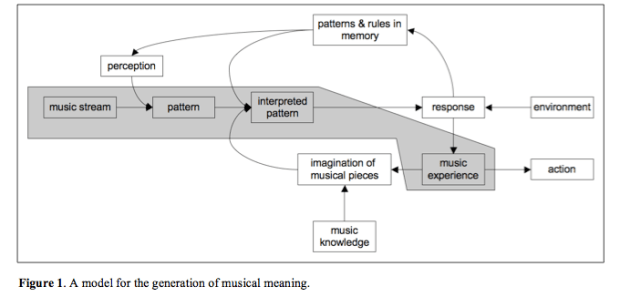
Notes
- Some unfortunate tendencies: anatomical view of music – a dead body that we do autopsies, time is the loser Traditional production-oriented/
- Measure of similarity: relevance, surprise
- Few interesting applications for end-users
- bad fit to present-day musicological themes
- We are in the world of ‘pure applied research’ – no truth interdisciplinary between music domain knowledge and computer science.
- Music is meaningful (and the underlying personal motivation of most MIR researchers).
- Meaning in musicology – traditionally a taboo suject
- Subjectivity: an indivds. disposition to engage in social and cultural interactions
- Meaning generation process – we have a long-term memory for music –
- Can musical meaning provide the ‘big story line’ for MIR?
The Discipline Formerly Known As MIR
Perfecto Herrera, Joan Serrà, Cyril Laurier, Enric Guaus, Emilia Gómez and Xavier Serra
Intro: Our exploration is not a science-fiction essay. We do not try to imagine how music will be conceptualized, experienced and mediated by our yet-to-come research, technological achievements and music gizmos. Alternatively, we reflect on how the discipline should evolve to become consolidated as such, in order it may get an effective future instead of becoming, after a promising start, just a “would-be” discipline.Our vision addresses different aspects: the discipline’s object of study, the employed methodologies, social and cultural impacts (which are out of this long abstract because of space restrictions), and we finish with some (maybe) disturbing issues that could be taken as partial and biased guidelines for future research.
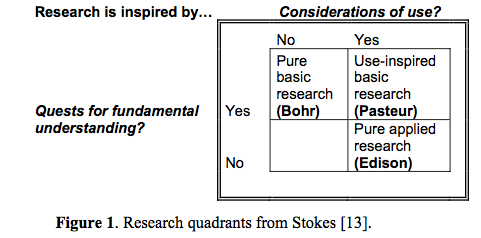
Notes: One motivation for advancing MIR – more banquets!
- MIR is no more about retrieval than computer science is about computers
- Music Information Retrieval – it’s too narrow
- Music Information or Information about Music?
- Interested in the interaction with music information
- We should be asking more profound questions
- music
- content tresasures in short musical exceprts, tracks performances etc.
- context
- music understanding systems
- Most metadata will be generated in the creation / production phase (hmm.. don’t agree necessarily, all the good metadata (tags, who likes what) is based on context and use which is post-hoc)
- Instead of automatic analysis – build systems to help humans help humans
- Music like water? or Music as dog!!! – a friend – companion –
- Personalization, Findability
- Music turing test
Good, provocative talk
Oral Session 2: Potential future MIR applications
Session Chair: Jason Hockman (McGill University), Program Chair of f(MIR)
Machine Listening to Percussion: Current Approaches and Future Directions – [pdf]
Michael Ward
Abstract: approaches have been taken to detect and classify percussive events within music signals for a variety of purposes with differing and converging aims. In this paper an overview of those technologies is presented and a discussion of the issues still to overcome and future possibilities in the field are presented. Finally a system capable of monitoring a student drummer is envisaged which draws together current approaches and future work in the field.
Notes:
- Challengs: Onset detection of isolated drum strokes
- Onset detection and classification of overlapping drum sounds
- Onset detection and classification in the presence of other instruments
- Variability in Percussive sounds . Dozens of criteria effect the sounds produced (strike velocity, angle, position etc.)
- Future Research Areas
- Extension of recognition to include the wide variety of strokes. (open hh, half-open hh, hh foot splash etc)
MIR When All Recordings Are Gone: Recommending Live Music in Real-Time – [pdf]
Marco Lüthy and Jean-Julien Aucouturier
Recommending live and short lived events. Bandsintown, Songkick, gigulate … pay attention to this paper.
Notes:
- Recommendation for live music in real-time
- Coldplay -> free album when you get a ticket to a coldplay concert – give away the music
- NIN -> USB keys in the toilet – which had strange recording on the file – strange sounds – an FFT of the sounds showed phone number and GPS coordinates – turned into a treasure hunt to a NIN nails concert.
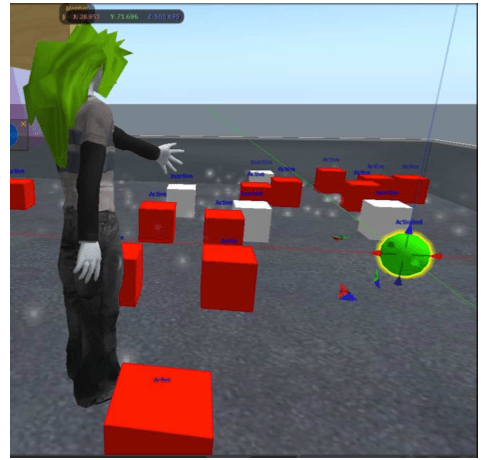
- Komuso Tokugawa – an avatar for a musiciaon in second life. Plays in second life, twitters concert announcements (playing wake for Les Paul in 3 minutes)
- ‘How do we get there in time?’
- JJ walked through how to implement a recommender system in second life
- Implicit preference inferred from how long your avatar listens to a concert (Nicole Yankelovich at Sun Labs should look at this stuff)
- Great talk by JJ – full of energy – neat ideas. Good work.
Poster Session
- Global Access to Ethnic Music: The Next Big Challenge?
Olmo Cornelis, Dirk Moelants and Marc Leman - The Future of Music IR: How Do You Know When a Problem Is Solved?
Eric Nichols and Donald Byrd
Using Visualizations for Music Discovery
Posted by Paul in code, data, events, fun, Music, music information retrieval, research, The Echo Nest, visualization on October 22, 2009
On Monday, Justin and I will present our magnum opus – a three-hour long tutorial entitled: Using Visualizations for Music Discovery. In this talk we look the various techniques that can be used for visualization of music. We include a survey of the many existing visualizations of music, as well as talk about techniques and algorithms for creating visualizations. My hope is that this talk will be inspirational as well as educational spawning new music discovery visualizations. I’ve uploaded a PDF of our slide deck to slideshare. It’s a big deck, filled with examples, but note that large as it is, the PDF isn’t the whole talk. The tutorial will include many demonstrations and videos of visualizations that just are not practical to include in a PDF. If you have the chance, be sure to check out the tutorial at ISMIR in Kobe on the 26th.
Who’s going to Boston Music Hackday?
Posted by Paul in events, fun, Music, The Echo Nest, web services on October 21, 2009
Look at all the companies and organizations going to Music Hack Day.
 The Echo Nest
 SoundCloud
 Indaba Music
Harmonix
Amie Street
8tracks
Playdar
Bandsintown
Tourfilter
NPR
Boxee
Sonos
Aviary
Conduit Labs
Topspin Media
Noteflight
Dorkbot
 Libre.fm
It promises to be a really fun weekend. If you are interested in hacking music and working with the folks that are building the celestial jukebox make sure you sign up, slots are going fast. There’s one guy I’d  to get to come to the hack day. I’m sure he’d be fascinated with all that goes on.
Playing with Playdar
Posted by Paul in code, fun, Music, playlist, recommendation, The Echo Nest on October 18, 2009
On Saturday morning I opened my web browser, built a playlist of a few songs and started to listen to them while I went about my morning computer tasks. Some of the songs in the playlist were on my laptop, while some were on the mac mini in the family room, and some were on a laptop of a friend that was on the other side of the Atlantic ocean. And if my friend in London had closed his laptop before I listened to ‘his’ song on my playlist it could have been replaced by a copy of the song that was on the computer of a friend in Seattle. I had a seamless music listening experience despite the fact that the music was scattered across a handful of computers on two continents. Such is the power of Playdar.

Playdar is a music content resolver. It is designed to solve one problem: given the name of track, find me a way to listen to it right now. You run Playdar on any computer that you own that has music and Playdar will make it easy to listen to all of that music as if it were on your local machine. The Playdar content resolver can also talk to other Playdar resolvers too, so if Playdar can’t find a track on my local network, it can ask my friend if it knows where the track is, extending my listening reach.
Playdar runs as a web service using standard web protocols for communicating with applications. When Playdar receives a request to resolve a track it runs through a list of prioritized content resolvers looking for the track. First it checks your local machine, then your local network. If it hasn’t found it there it could, if so configured, try your friends computers, or even a commercial song resolver (One could imagine for example, a music label offering up a portion of their catalog via a content resolver as a way to expose more listeners to their music). Playdar will do its best to find a copy of a song that you can listen to now. Playdar enables a number of new listening modes:
- Listen to my music anywhere – with Playdar, I don’t have to shoehorn my entire music collection onto every computer that I own just so I can listen to it no matter what computer I’m on. I can distribute my music collection over all my computers – and no matter what computer I’m on I have all my music available.
- Save money for music streamers – Music streaming services like Last.fm, Spotify and Pandora spend money for every song that is streamed. Often times, the listener will already own the song that is being streamed. Playdar-enabled music streaming services could save streaming costs by playing a local copy of a song if one is available.
- Share playlists and mixtapes – with Playdar a friend could give me a playlist (perhaps in a XSPF format) and I could listen to the playlist even if I don’t own all of the songs.
- Pool the music – At the Echo Nest, everyone has lots of music in their personal collections. When we are all in the same room it is fun to be able to sample music from each other. iTunes lets you do this but searching through 15 separate collections for music in iTunes is burdensome. With Playdar, all the music on all of the computers running Playdar on your local lan can be available for you to search and play without any of the iTunes awkwardness.
- Add Play buttons to songs on web pages – Since Playdar uses standard web protocols, it is possible to query and control Playdar from Javascript – meaning that Playdar functionality can be embedded in any web page. I could blog about a song and sprinkle in a little Javascript to add a ‘play’ button to the song that would use Playdar to find the best way to play the song. If I write a review about the new Beatles reissue and want the reader to be able to listen to the tracks I’m writing about, I can do that without having to violate Beatles copyrights. When the reader clicks the play button, Playdar will find the local copy that is already on the reader’s computer.
Playdar’s Marconi Moment
Playdar is the brainchild of RJ, the inventor of the audioscrobbler and one of the founders of Last.fm. RJ started coding Playdar in March of this year – but a few weeks ago he threw away the 10,000 lines of C++ code and started to rewrite it from scratch in Erlang. A few days later RJ tweeted: I should be taken aside and shot for using C++ for Playdar originally. It’s criminal how much more concise Erlang is for this. Less than 3 weeks after starting from a clean sheet of paper, the new Erlang-based Playdar had its first transatlantic track resolution and streaming. The moment occurred on Friday, October 16th. Here’s the transcript from the IRC channel (tobyp is Toby Padilla, of MusicMobs and Last.fm fame) when London-based RJ first streamed a track from Toby’s Seattle computer:
[15:40:46] <tobyp> http://www.playdar.org/demos/search.html#artist=pantera&album=&track=burnnn
[15:41:06] <RJ2> woo, transatlantic streaming
[15:41:19] <tobyp> hot!
[15:41:35] <RJ2> playdar’s marconi moment
[15:41:42] <tobyp> hahah
An incredible amount of progress has been made in the last two weeks, a testament to RJ’s skills as much as Erlang’s expressiveness. Still, Playdar is not ready for the general public. It requires a bit of work to install and get running – (yep, the erlang runtime is required), but developer Max Howell has been working on making a user-friendly package to make it easy for anyone to install. Hopefully it won’t be too long before Playdar is ready for the masses.
Even though it is new, there’s already some compelling apps that use Playdar. One is Playlick:
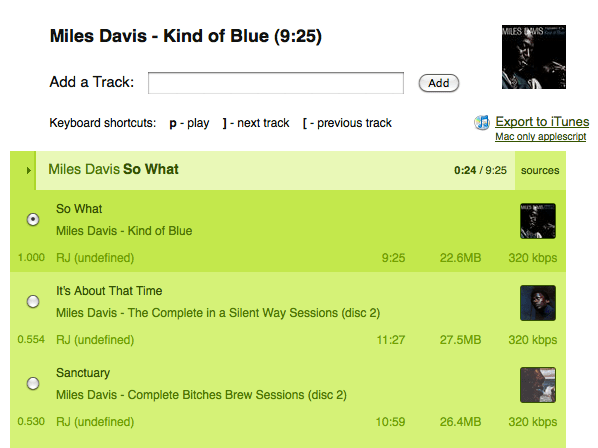
Playlick is a web application, developed by James Wheare that lets you build playlists. It uses Playdar for all music resolution. Type in the name of an album and Playlick / Playdar will find the music for you and let you listen to it. It’s a great way to see/hear the power of Playdar.
Adding custom content resolvers
One of the strengths of Playdar is that it is very easy to add new resolvers. If you are a music service provider you can create a Playdar content resolver that will serve up your content. I wrote a content resolver that uses the Echo Nest to resolve tracks using our index of audio that we’ve found on the web. This resolver can be used as a backstop. If you can’t find a track on your computer or your friend’s computers the Echo Nest resolver might be able to find a version out there on some music blog. Of course, the quality and availability of such free-range music is highly variable, so this resolver is a last resort.
Adding a new resolver to Playdar was extremely easy. It took perhaps 30 minutes to write – the hardest part was figuring out git – (thanks to RJ for walking me through the forks, pushes and ssh key settings). You can see the code here: echonest-resolver.py. Less than 150 lines of code, half of which is boilerplate. 150 lines and 30 minutes to add a whole new collection of music to the Playdar universe. Hopefully soon we’ll see resolvers for music streaming services like Napster, Rhapsody and Spotify.
What’s Next for Playdar?
Playdar is new – and the plumbing and wiring are still be worked on – but already it is doing something pretty magical – letting me listen to any track I want to right now. I can see how Playdar could be extended into acting as my music agent. Over time, my Playdar servers will get to know quite a bit about my music tastes. They’ll know what music I like to listen to, and when I like to listen to it. Perhaps someday, instead of asking Playdar to resolve a specific track by name, I’ll just be able to ask Playdar to give me a playlist of new music that I might like. Playdar can then use an Echo Nest, Last.fm or an AMG playlister to build a playlist of interesting, relevant new music. Playdar won’t just be a music resolver, Playdar will be my music agent helping me explore for and discover new music.
Updated Java client for the Echo Nest API
Posted by Paul in code, java, Music, The Echo Nest, web services on October 15, 2009
We’ve pushed out a new version of the open source Java client for the Echo Nest API. The new version provides support for the different versions of the Echo Nest analyzer. You can use the traditional, but somewhat temperamental version 1 of the analyzer, or the spiffy new, ultra-stable version 3 of the analyzer. By default, the Java client uses the new analyzer version, but if you need your application to work the exactly the same way that it did six months ago you can always use the older version.
Here’s a bit of Java code that will print out the tempo of all the songs in a directory:
void showBPMS(File dir) throws EchoNestException {
     TrackAPI trackAPI = new TrackAPI();
     File[] files = dir.listFiles();
     for (File f : files) {
         if (f.getAbsolutePath().toLowerCase().endsWith(".mp3")) {
             String id = trackAPI.uploadTrack(f, true);
             System.out.printf("Tempo 6%.3f %s\n",
                 trackAPI.getTempo(id).getValue(), f.getAbsoluteFile());
         }
     }
}
Running this code on a folder containing the new Breaking Benjamin album yields this output:
Tempo  85.57 /Users/plamere/Music/Amazon MP3/Breaking Benjamin/Dear Agony/01 - Fade Away.mp3
Tempo 108.01 /Users/plamere/Music/Amazon MP3/Breaking Benjamin/Dear Agony/02 - I Will Not Bow.mp3
Tempo 168.81 /Users/plamere/Music/Amazon MP3/Breaking Benjamin/Dear Agony/03 - Crawl.mp3
Tempo 156.75 /Users/plamere/Music/Amazon MP3/Breaking Benjamin/Dear Agony/04 - Give Me A Sign.mp3
Tempo  85.51 /Users/plamere/Music/Amazon MP3/Breaking Benjamin/Dear Agony/05 - Hopeless.mp3
Tempo  68.34 /Users/plamere/Music/Amazon MP3/Breaking Benjamin/Dear Agony/06 - What Lies Beneath.mp3
Tempo 116.94 /Users/plamere/Music/Amazon MP3/Breaking Benjamin/Dear Agony/07 - Anthem Of The Angels.mp3
Tempo  85.50 /Users/plamere/Music/Amazon MP3/Breaking Benjamin/Dear Agony/08 - Lights Out.mp3
Tempo 125.77 /Users/plamere/Music/Amazon MP3/Breaking Benjamin/Dear Agony/09 - Dear Agony.mp3
Tempo  94.99 /Users/plamere/Music/Amazon MP3/Breaking Benjamin/Dear Agony/10 - Into The Nothing.mp3
Tempo 160.38 /Users/plamere/Music/Amazon MP3/Breaking Benjamin/Dear Agony/11 - Without You.mp3
You can download the new Java client from the echo-nest-java-api code repository. The new version is: echo-nest-java-api-1.2.zip
Music Playlist quiz followup
I had a playlist quiz the other day. To recap, I asked, given a set of 6 songs, find the organizing principal and pick a new good song for the playlist. A few attempted to extend the playlist, but only Adam offered a successful match. Here are the seed songs, but this time I also include the album art – which may help you decide what songs fit and what don’t:
- Made to measure – Umphrey’s McGeez

- Diablo Rojo – Rodrigo Y Gabriella

- Livin’ Thing – Electric Light Orchestra

- Two Step – Dave Matthew’s Band

- Vortex – Burst

- Almost Honest – Megadeth

Adam’s suggestion of XTC’s Wake up fits well:

We’ll call this playlist, the squared circle. There are lots more potential album covers for albums in this genre on Flickr: squaredcircle
Berlin Music Hackday presentation videos
There are a bunch of videos of presentations and demos from the Music Hackday berlin: http://qik.com/digitalwaveriding:
Photos from Berlin Music Hackday
Posted by Paul in code, events, The Echo Nest on September 19, 2009

"I am a jelly roll"
There are some nifty photos coming of the the Berlin Music Hackday. Here’s a slide show.
 Music Machinery