The Most Replayed Songs
Posted by Paul in data, Music, The Echo Nest on August 27, 2013
 I still remember the evening well. It was midnight during the summer of 1982. I was living in a thin-walled apartment, trying unsuccessfully to go to sleep while the people who lived upstairs were music bingeing on The B52’s Rock Lobster. They listened to the song continuously on repeat for hours, giving me the chance to ponder the rich world of undersea life, filled with manta rays, narwhals and dogfish.
We tend to binge on things we like – potato chips, Ben & Jerry’s, and Battlestar Galactica. Music is no exception. Sometimes we like a song so much, that as soon as it’s over, we want to hear it again. But not all songs are equally replayable. There are some songs that have some secret mysterious ingredients that makes us want to listen to the song over and over again. What are these most replayed songs? Let’s look at some data to find out.
The Data – For this experiment I used a week’s worth of song play data from the summer of 2013 that consists of user / song / play-timestamp triples. This data set has on the order of 100 million of these triples for about a half million unique users and 5 million unique songs. To find replays I looked for consecutive plays by a user of song within a time window (to ensure that the replays are in the same listening session). Songs with low numbers of plays or fans were filtered out.
For starters, I simply counted up the most replayed songs. As expected, this yields very boring results – the list of the top most replayed songs is exactly the same as the most played songs. No surprise here. The most played songs are also the most replayed songs.
Top Most Replayed Songs – (A boring result)
- Robin Thicke — Blurred Lines featuring T.I., Pharrell
- Jay-Z — Holy Grail featuring Justin Timberlake
- Miley Cyrus — We Can’t Stop
- Imagine Dragons — Radioactive
- Macklemore — Can’t Hold Us (feat. Ray Dalton)
To make this more interesting, instead of looking at the absolute number of replays, I adjusted for popularity by looking at the ratio of replays to the total number of plays for each song. This replay ratio tells us the what percentage of plays of a song are replays. If we plot the replay ratio vs. the number of fans a song has the outliers become quite clear. Some songs are replayed at a higher rate than others.

click to open an interactive version of this chart.
I made an interactive version of this graph, you can mouse over the songs to see what they are and click on the songs to listen to them.
Sorting the results by the replay ratio yields a much more interesting result. It surfaces up a few classes of frequently replayed songs: background noise, children’s music, soft and smooth pop and friday night party music. Here’s the color coded list of the top 20:
Top Replayed songs by percentage
- 91% replays White Noise For Baby Sleep — Ocean Waves
- 86% replays Eric West — Reckless (From Playing for Keeps)
- 86% replays Soundtracks For The Masters — Les Contes D’hoffmann: Barcarole
- 83% replays White Noise For Baby Sleep — Warm Rain
- 83% replays Rain Sounds — Relax Ocean Waves
- 82% replays Dennis Wilson — Friday Night
- 81% replays Sleep — Ocean Waves for Sleep – White Noise
- 74% replays White Noise Sleep Relaxation White Noise Relaxation: Ocean Waves 7hz
- 74% replays Ween — Ocean Man
- 73% replays Children’s Songs Music — Whole World In His Hands
- 71% replays Glee Cast — Friday (Glee Cast Version)
- 63% replays Rain Sounds — Rain On the Window
- 63% replays Rihanna — Cheers (Drink To That)
- 60% replays Group 1 Crew — He Said (feat. Chris August)
- 59% replays Karsten Glück Simone Sommerland — Schlaflied für Anne
- 56% replays Monica — With You
- 54% replays Jessie Ware — Wildest Moments
- 53% replays Tim McGraw — I Like It, I Love It
- 53% replays Rain Sounds — Morning Rain In Sedona
- 52% replays Rain Sounds — Rain Sounds
It is no surprise that the list is dominated by background noise. There’s nothing like ambient ocean waves or rain sounds to help baby go to sleep in the noisy city. A five minute track of ambient white noise may be played dozens of times during every nap. It is not uncommon to find 8 hour long stretches of the same five minute white noise audio track played on auto repeat.
The top most replayed song is Reckless by Eric West from the ‘shamelessly sentimental’ 2012 movie Playing for Keeps (4% rotten). 86% of the time this song is played it is a replay. This is the song that you can’t listen to just once. It is the Lays potato chip of music. Beware, if you listen to it, you may be caught in its web and you’ll never be able to escape. Listen at your own risk:
Luckily, most people don’t listen to this song even once. It is only part of the regular listening rotation of a couple hundred listeners. Still, it points to a pattern that we’ll see more of – overly sentimental music has high replay value.
Top Replayed Popular Songs
Perhaps even more interesting is to look at the top most replayed popular songs. We can do this by restricting the songs in the results to those that are by artists that have a significant fan base:
- 31% replays Miley Cyrus — The Climb
- 16% replays August Alsina — I Luv This sh*t featuring Trinidad James
- 15% replays Brad Paisley — Whiskey Lullaby
- 14% replays Tamar Braxton — The One
- 14% replays Chris Brown — Love More
- 14% replays Anna Kendrick — Cups (Pitch Perfect’s “When I’m Gone”)
- 13% replays Avenged Sevenfold — Hail to the King
- 13% replays Jay-Z — Big Pimpin’
- 13% replays Labrinth — Beneath Your Beautiful
- 13% replays Karmin — Acapella
- 12% replays Lana Del Rey — Summertime Sadness [Lana Del Rey vs. Cedric Gervais]
- 12% replays MGMT — Electric Feel
- 12% replays One Direction — Best Song Ever
- 12% replays Big Sean — Beware featuring Lil Wayne, Jhené Aiko
- 12% replays Chris Brown — Don’t Think They Know
- 11% replays Justin Bieber — Boyfriend
- 11% replays Avicii — Wake Me Up
- 11% replays 2 Chainz — Feds Watching featuring Pharrell
- 10% replays Paramore — Still Into You
- 10% replays Alicia Keys — Fire We Make
- 10% replays Lorde — Royals
- 10% replays Miley Cyrus — We Can’t Stop
- 10% replays Ciara — Body Party
- 9% replays Marc Anthony — Vivir Mi Vida
- 9% replays Ellie Goulding — Burn
- 9% replays Fantasia — Without Me
- 9% replays Rich Homie Quan — Type of Way
- 9% replays The Weeknd — Wicked Games (Explicit)
- 9% replays A$AP Ferg — Work REMIX
- 9% replays Jay-Z — Part II (On The Run) featuring Beyoncé
It is hard to believe, but the data doesn’t lie – More than 30% of the time after someone listens to Miley Cyrus’s The Climb they listen to it again right away – proving that there is indeed always going to be another mountain that you are going to need to climb. Miley Cyrus is well represented – her aptly named song We can’t Stop is the most replayed song of the top ten most popular songs.
Here are the top 30 most replayed popular songs in Spotify and Rdio playlists for you to enjoy, but I’m sure you’ll never get to the end of the playlist, you’ll just get stuck repeating The Best Song Ever or Boyfriend forever.
Here’s the Rdio version of the Top 30 Most Replayed popular songs:
http://www.rdio.com/people/plamere/playlists/5733386/Most_replayed/Most Manually Replayed
More than once I’ve come back from lunch to find that I left my music player on auto repeat and it has played the last song 20 times while I was away. The song was playing, but no one was listening. It is more interesting to find songs replays in which the replay is manually initiated. These are the songs that grabbed the attention of the listener enough to make them interact with their player and actually queue the song up again. We can find manually replayed songs by looking at replay timestamps. Replays generated by autorepeat will have a very regular timestamp delta, while manual replay timestamps will have more random delta between timestamps.
Here are the top manually replayed songs:
- Body Party by Ciara
- Still Into You by Paramore
- Tapout featuring Lil Wayne, Birdman, Mack Maine, Nicki Minaj, Future by Rich Gang
- Part II (On The Run) featuring Beyoncé by Jay-Z
- Feds Watching featuring Pharrell by 2 Chainz
- Royals by Lorde
- V.S.O.P. by K. Michelle
- Just Give Me A Reason by Pink
- Don’t Think They Know by Chris Brown
- Wake Me Up by Avicii
There’s an Rdio playlist of these songs: Most Manually Replayed
So what?
Why do we care which songs are most replayed? It’s part of our never ending goal to try to better understand how people interact with music. For instance, recognizing when music is being used in a context like helping the baby go to sleep is important – without taking this context into account, the thousands of plays of Ocean Waves and Warn Rain would dominate the taste profile that we build for that new mom and dad. We want to make sure that when that mom and dad are ready to listen to music, we can recommend something besides white noise.
Looking at replays can help us identify new artists for certain audiences. For instance, parents looking for an alternative to Miley Cyrus for their pre-teen playlists after Miley’s recent VMA performance, may look to an artist like Fifth Harmony. Their song Miss Movin’ On has similar replay statistics to the classic Miley songs:
http://www.rdio.com/artist/Fifth_Harmony/album/Miss_Movin%27_On/track/Miss_Movin%27_On/Finally, looking at replays is another tool to help us understand the music that people really like. If the neighbors play Rock Lobster 20 times in a row, you can be sure that they really, really like that song. (And despite, or perhaps because of, that night 30 years ago, I like the song too). You should give it a listen, or two…
http://www.rdio.com/artist/The_B-52%27s/album/Rock_Lobster_/_6060-842_(Digital_45)/track/Rock_Lobster/Top SXSW Music Panels for music exploration, discovery and interaction
SXSW 2014 PanelPicker has opened up. I took a tour through the SXSW Music panel proposals to highlight the ones that are of most interest to me … typically technical panels about music discovery and interaction. Here’s the best of the bunch. You’ll notice a number of Echo Nest oriented proposals. I’m really not shilling, I genuinely think these are really interesting talks (well, maybe I’m shilling for my talk).
I’ve previously highlighted the best the bunch for SXSW Interactive.
A Genre Map for Discovering the World of Music
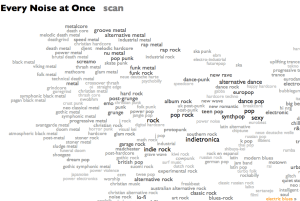 All the music ever made (approximately) is a click or two away. Your favorite music in the world is probably something you’ve never even heard of yet. But which click leads to it?
Most music “discovery” tools are only designed to discover the most familiar thing you don’t already know. Do you like the Dave Matthews Band? You might like O.A.R.! Want to know what your friends are listening to? They’re listening to Daft Punk, because they don’t know any more than you. Want to know what’s hot? It’s yet another Imagine Dragons song that actually came out in 2012. What we NEED are tools for discovery through exploration, not dictation.
This talk will provide a manic music-discovery demonstration-expedition, showcasing how discovery through exploration (The Echo Nest Discovery list & the genre mapping experiment, Every Noise at Once) in the new streaming world is not an opportunity to pay different people to dictate your taste, but rather a journey, unearthing new music JUST FOR YOU.
The Predictive Power of Music
Music taste is extremely personal and an important part of defining and communicating who we are.
Musical Identity, understanding who you are as a music fan and what that says about you, has always been a powerful indicator of other things about you. Broadcast radio’s formats (Urban, Hot A/C, Pop, and so on) are based on the premise that a certain type of music attracts a certain type of person. However, the broadcast version of Musical Identity is a blunt instrument, grouping millions of people into about 12 audience segments. Now that music has become a two-way conversation online, Musical Identity can become considerably more precise, powerful, and predictive.
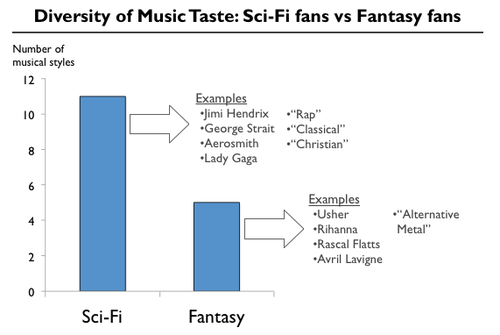
In this talk, we’ll look at why music is one of the strongest predictors and how music preference can be used to make predictions about your taste in other forms of entertainment (books, movies, games, etc).
Your Friends Have Bad Taste: Fixing Social Music
Music is the most social form of entertainment consumption, but online music has failed to deliver truly social & connected music experiences. Social media updates telling you your aunt listened to Hall and Oates doesn’t deliver on the promise of social music. As access-based, streaming music becomes more mainstream, the current failure & huge potential of social music is becoming clearer. A variety of app developers & online music services are working to create experiences that use music to connect friends & use friends to connect you with new music you’ll love. This talk will uncover how to make social music a reality.
Anyone Can Be a DJ: New Active Listening on Mobile
The mobile phone has become the de facto device for accessing music. According to a recent report, the average person uses their phone as a music player 13 times per day. With over 30 million songs available, any time, any place, listening is shifting from a passive to a personalized and interactive experience for a highly engaged audience.
New data-powered music players on sensor-packed devices are becoming smarter, and could enable listeners to feel more like creators (e.g. Instagram) by dynamically adapting music to its context (e.g. running, commuting, partying, playing). A truly personalized pocket DJ will bring music listening, discovery, and sharing to an entirely new level.
In this talk, we’ll look at how data-enhanced content and smarter mobile players will change the consumer experience into a more active, more connected, and more engaged listening experience.
Human vs. Machine: The Music Curation Formula
Recreating human recommendations in the digital sphere at scale is a problem we’re actively solving across verticals but no one quite has the perfect formula. The vertical where this issue is especially ubiquitous is music. Where we currently stand is solving the integration of human data with machine data and algorithms to generate personalized recommendations that mirrors the nuances of human curation. This formula is the holy grail.
Algorithmic, Curated & Social Music Discover
As the Internet has made millions of tracks available for instant listening, digital music and streaming companies have focused on music recommendations and discovery. Approaches have included using algorithms to present music tailored to listeners’ tastes, using the social graph to find music, and presenting curated & editorial content. This panel will discuss the methods, successes and drawbacks of each of these approaches. We will also discuss the possibility of combining all three approaches to present listeners with a better music discovery experience, with on-the-ground stories of the lessons from building a Discover experience at Spotify.
Beyond the Play Button – The Future of Listening (This is my talk)
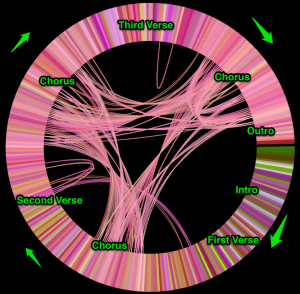
Rolling in the Deep (labelled) by Adele
35 years after the first Sony Walkman shipped, today’s music player still has essentially the same set of controls as that original portable music player. Even though today’s music player might have a million times more music than the cassette player, the interface to all of that music has changed very little.
In this talk we’ll explore new ways that a music listener can interact with their music. First we will explore the near future where your music player knows so much about you, your music taste and your current context that it plays the right music for you all the time. No UI is needed.
Next, we’ll explore a future where music listening is no longer a passive experience. Instead of just pressing the play button and passively listening you will be able to jump in and interact with the music. Make your favorite song last forever, add your favorite drummer to that Adele track or unleash your inner Skrillex and take total control of your favorite track.
5 Years of Music Hack Day
 Started in 2009 by Dave Haynes and James Darling, Music Hack Day has become the gold standard of music technology events. Having grown to a worldwide, monthly event that has seen over 3500 music hacks created in over 20 cities the event is still going great guns. But, what impact has this event had on the music industry and it’s connection with technology? This talk looks back at the first 5 years of Music Hack Day, from it’s origins to becoming something more important and difficult to control than it’s ‘adhocracy’ beginnings. Have these events really impacted the industry in a positive way or have the last 5 years simply seen a maturing attitude towards technologies place in the music industry? We’ll look at the successes, the hacks that blew people’s minds and what influence so many events with such as passionate audience have had on changing the relationship between music and tech.
The SXSW organizers pay attention when they see a panel that gets lots of votes, so head on over and make your opinion be known.
Top SXSWi panels for music discovery and interaction
SXSW 2014 PanelPicker has opened up. I took a tour through the SXSW Interactive talk proposals to highlight the ones that are of most interest to me … typically technical panels about music discover and interaction. Here’s the best of the bunch. Tomorrow, I’ll take a tour through the SXSW Music proposals.
Algorithmic Music Discovery at Spotify
Spotify crunches hundreds of billions of streams to analyze user’s music taste and provide music recommendations for its users. We will discuss how the algorithms work, how they fit in within the products, what the problems are and where we think music discovery is going. The talk will be quite technical with a focus on the concepts and methods, mainly how we use large scale machine learning, but we will also some aspects of music discovery from a user perspective that greatly influenced the design decisions.
Delivering Music Recommendations to Millions
At its heart, presenting personalized data and experiences for users is simple. But transferring, delivering and serving this data at high scale can become quite challenging.
In this session, we will speak about the scalability lessons we learned building Spotify’s Discover system. This system generates terabytes of music recommendations that need to be delivered to tens of millions of users every day. We will focus on the problems encountered when big data needs to be replicated across the globe to power interactive media applications, and share strategies for coping with data at this scale.
Are Machines the DJ’s of Digital Music?
When it comes to music curation, has our technology exceeded our humanity? Fancy algorithms have done wonders for online dating. Can they match you with your new favorite music? Hear music editors from Rhapsody, Google Music, Sony Music and Echonest debate their changing role in curation and music discovery for streaming music services. Whether tuning into the perfect summer dance playlist or easily browsing recommended artists, finding and listening to music is the result of very intentional decisions made by editorial teams and algorithms. Are we sophisticated enough to no longer need the human touch on our music services? Or is that all that separates us from the machines?
Your Friends Have Bad Taste: Fixing Social Music
Music is the most social form of entertainment consumption, but online music has failed to deliver truly social & connected music experiences. Social media updates telling you your aunt listened to Hall and Oates doesn’t deliver on the promise of social music. As access-based, streaming music becomes more mainstream, the current failure & huge potential of social music is becoming clearer. A variety of app developers & online music services are working to create experiences that use music to connect friends & use friends to connect you with new music you’ll love. This talk will uncover how to make social music a reality, including:
- Musical Identity (MI) – who we are as music fans and how understanding MI is unlocking social music apps
- If my friend uses Spotify & I use Rdio, can we still be friends? ID resolution & social sharing challenges
- Discovery issue: finding like-minded fans & relevant expert music curators
- A look at who’s actually building the future of social music
‘Man vs. Machine’ Is Dead, Long Live Man+Machine
A human on a bicycle is the most efficient land-traveller on planet Earth. Likewise, the most efficient advanced, accurate, helpful, and enjoyable music recommendation systems combine man and machine. This dual-pronged approach puts powerful, data-driven tools in the hands of thinking, feeling experts and end users. In other words, the debate over whether human experts or machines are better at recommending music is over. The answer is “both” — a hybrid between creative technology and creative curators. This panel will provide specific examples of this approach that are already taking place, while looking to the future to see where it’s all headed.
Are Recommendation Engines Killing Discovery?
Are recommendation engines – like Yelp, Google, and Spotify – ruining the way we experience life? “Absolutely,” says Ned Lampert. The average person looks at their phone 150 times a day, and the majority of content they’re looking at is filtered through a network of friends, likes, and assumptions. Life is becoming prescriptive, opinions are increasingly polarized, and curiosity is being stifled. Recommendation engines leave no room for the unexpected. Craig Key says, “absolutely not.” The Web now has infinitely more data points than we did pre-Google. Not only is there more content, but there’s more data about you and me: our social graph, Netflix history (if you’re brave), our Tweets, and yes, our Spotify activity. Data is the new currency in digital experiences. While content remains king, it will be companies that can use data to sort and display that content in a meaningful way that will win. This session will explore these dueling perspectives.
Genre-Bending: Rise of Digital Eclecticism
The explosion in popularity of streaming music services has started to change the way we listen. But even beyond those always-on devices with unlimited access to millions of songs that we listen to on our morning commutes, while wending our way through paperwork at our desks or on our evening jogs, there is an even a more fundamental change going on. Unlimited access has unhinged musical taste to the point where eclecticism and tastemaking trump identifying with a scene. Listeners are becoming more adventurous, experiencing many more types of music than ever before. And artists are right there with them, blending styles and genres in ways that would be unimaginable even a decade ago. In his role as VP Product-Content Jon Maples has a front row seat to how music-listening behavior has evolved. He’ll share findings from a recent ethnographic study that reveals intimate details on how people live their musical lives.
Put It In Your Mouth: Startups as Tastemakers
Your life has been changed, at least once, by a startup in the last year. Don’t argue; it’s true. Think about it – how do you listen to music? How do you choose what movie to watch? How do you shop, track your fitness or share memories? Whoever you are, whatever your preferences, emerging technology has crept into your life and changed the way you do things on a daily basis. This group of innovators and tastemakers will take a highly entertaining look at how the apps, devices and online services in our lives are enhancing and molding our culture in fundamental ways. Be warned – a dance party might break out and your movie queue might expand exponentially.
And here’s a bit of self promotion … my proposed panel is all about new interfaces for music.
Beyond the Play Button – The Future of Listening
35 years after the first Sony Walkman shipped, today’s music player still has essentially the same set of controls as that original portable music player. Even though today’s music player might have a million times more music than the cassette player, the interface to all of that music has changed very little. In this talk we’ll explore new ways that a music listener can interact with their music. First we will explore the near future where your music player knows so much about you, your music taste and your current context that it plays the right music for you all the time. No UI is needed. Next, we’ll explore a future where music listening is no longer a passive experience. Instead of just pressing the play button and passively listening you will be able to jump in and interact with the music. Make your favorite song last forever, add your favorite drummer to that Adele track or unleash your inner Skrillex and take total control of your favorite track.
The SXSW organizers pay attention when they see a panel that gets lots of votes, so head on over and make your opinion be known.
Beyond the Play Button – My SXSW Proposal
It is SXSW Panel Picker season. I’ve submitted a talk to both SXSW Interactive and SXSW Music. The talk is called ‘Beyond the Play Button – the Future of Listening’ – the goal of the talk is to explore new interfaces for music listening, discovery and interaction. I’ll show a bunch of my hacks and some nifty stuff I’ve been building in the lab. Here’s the illustrated abstract:
35 years after the first Sony Walkman shipped, today’s music player still has essentially the same set of controls as that original portable music player. Even though today’s music player might have a million times more music than the cassette player, the interface to all of that music has changed very little.


In this talk we’ll explore new ways that a music listener can interact with their music. First we will explore the near future where your music player knows so much about you, your music taste and your current context that it plays the right music for you all the time. No UI is needed.

Next, we’ll explore a future where music listening is no longer a passive experience. Instead of just pressing the play button and passively listening you will be able to jump in and interact with the music. Make your favorite song last forever, add your favorite drummer to that Adele track or unleash your inner Skrillex and take total control of your favorite track.

One Minute Radio
Posted by Paul in Music, playlist, The Echo Nest on August 16, 2013
If you’ve got a short attention span when it comes to new music, you may be interested in One Minute Radio. One Minute Radio is a Pandora-style radio app with the twist that it only every plays songs that are less than a minute long. Select a genre and you’ll get a playlist of very short songs.

Now I can’t testify that you’ll always get a great sounding playlist – you’ll hear intros, false starts and novelty songs throughout, but it is certainly interesting. And some genres are chock full of good short songs, like punk, speed metal, thrash metal and, surprisingly, even classical.
OMR was inspired by a conversation with Glenn about the best default for song duration filters in our playlisting API. Check out One Minute Radio. The source is on github too.
The Saddest Stylophone – my #wowhack2 hack
Posted by Paul in hacking, Music, The Echo Nest on August 15, 2013
Last week, I ventured to Gothenburg Sweden to participate in the Way Out West Hack 2 – a music-oriented hackathon associated with the Way Out West Music Festival.

I was, of course, representing and supporting The Echo Nest API during the hack, but I also put together my own Echo Nest-based hack: The Saddest Stylophone. The hack creates an auto accompaniment for just about any song played on the Stylophone – an analog synthesizer toy created in the 60s that you play with a stylus.

Two hacking pivots on the way … The road to the Saddest Stylophone was by no means a straight line. In fact, when I arrived at #wowhack2 I had in mind a very different hack – but after the first hour at the hackathon it became clear that the WIFI at the event was going to be sketchy at best, and it was going to be very slow going for any hack (including the hack I had planned) that was going to need zippy access to to the web, and so after an hour I shelved that idea for another hack day. The next idea was to see if I could use the Echo Nest analysis data to convert any song to an 8-bit chiptune version.  This is not new ground, Brian McFee had a go at this back at the 2012 MIT Music Hack Day. I thought it would be interesting to try a different approach and use an off-the-shelf 8bit software synth and the Echo Nest pitch data. My intention was to use a Javascript sound engine called jsfx to generate the audio. It seemed like it pretty straightforward way to create authentic 8bit sounds. In small doses jsfx worked great, but when I started to create sequences of overlapping sounds my browser would crash. Every time. After spending a few hours trying to figure out a way to get jsfx to work reliably, I had to abandon jsfx. It just wasn’t designed to generate lots of short overlapping and simultaneous sounds, and so I spent some time looking for another synthesizer. I finally settled on timbre.js. Timbre.js seemed like a fully featured synth. Anyone with a Csound background
 would be comfortable with creating sounds with Timbre.js It did not take long before I was generating tones that were tracking the melody and chord changes of a song. My plan was to create a set of tone generators, and dynamically control the dynamics envelope based upon the Echo Nest segment data. This is when I hit my next roadblock. The timbre.js docs are pretty good, but I just couldn’t find out how to dynamically adjust parameters such as the ADSR table. I’m sure there’s a way to do it, but when there’s only 12 hours left in a 24 hour hackathon, the two hours spent looking through JS library source seemed like forever, and I began to think that I’d not figure out how to get fine grained control over the synth. I was pretty happy with how well I was able to track a song and play along with it, but without ADSR control or even simple control over dynamics the output sounded pretty crappy. In fact I hadn’t heard anything that sounded so bad since I heard @skattyadz
  play a tune on his Stylophone at the Midem Music Hack Day earlier this year. That thought turned out to be the best observation I had during the hackathon. I could hide all of my troubles trying to get a good sounding output by declaring that my hack was a Stylophone simulator. Just like a Stylophone, my app would not be capable of playing multiple tones at once, it would not have complex changes in dynamics, it would only have a one and half octave range, it would not even have a pleasing tone. All I’d need to do would be to convincingly track a melody or harmonic line in a song and I’d be successful. And so, after my third pivot, I finally had a hack that I felt I’d be able to finish in time for the demo session and not embarrass myself. I was quite pleased with the results.
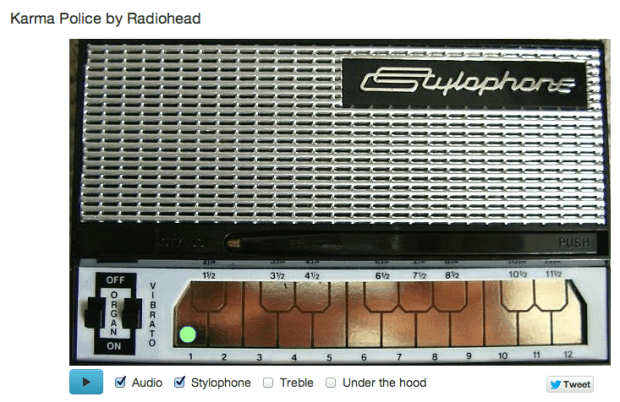
How does it work? The Sad Stylophone takes advantage of the Echo Nest detailed analysis. The analysis provides detailed information about a song. It includes information about where all the bars and beats are, and includes a very detailed map of the segments of a song. Segments are typically small, somewhat homogenous audio snippets in a song, corresponding to musical events (like a strummed chord on the guitar or a brass hit from the band).
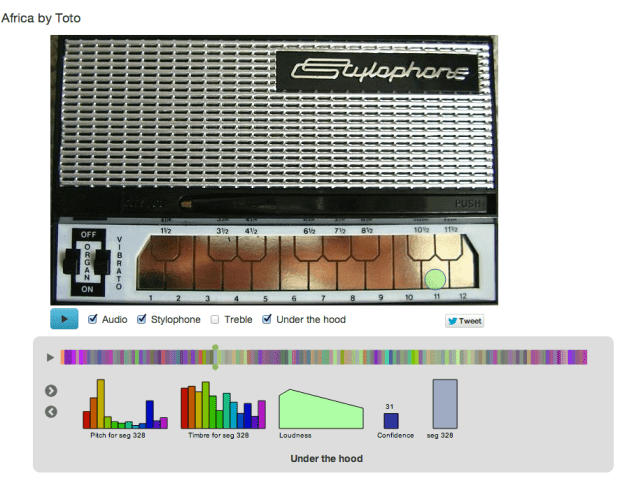
A single segment contains detailed information on the pitch, timbre, loudness. For pitch it contains a vector of 12 floating point values that correspond to the amount of energy at each of the notes in the 12-note western scale. Here’s a graphic representation of a single segment:

This graphic shows the pitch vector, the timbre vector, the loudness, confidence and duration of a segment.
The Saddest Stylophone only uses the pitch, duration and confidence data from each segment. First, it filters segments to combine short, low confidence segments with higher confidence segments. Next it filters out segments that don’t have a predominant frequency component in the pitch vector. Then for each surviving segment, it picks the strongest of the 12 pitch bins and maps that pitch to a note on the Stylophone. Since the Stylophone supports an octave and a half (20 notes), we need to map 12 notes onto 20 notes. We do this by unfolding the 12 bins by reducing inter-note jumps to less than half an octave when possible. For example, if between segment one and segment two we would jump 8 notes higher, we instead check to see if it would be possible to jump to 4 notes lower instead (which would be an octave lower than segment two) while still remaining within the Stylophone range. If so, we replace the upward long jump with the downward, shorter jump. The result of this a list of notes and timings mapped on to the 20 notes of the Stylophone. We then map the note onto the proper frequency and key position – the rest is just playing the note via timbre.js at the proper time in sync with the original audio track and animating the stylus using Raphael.
I’ve upgraded the app to include an Under the hood selection that, when clicked opens up a visualization that shows the detailed info for a segment, so you can follow along and see how each segment is mapped onto a note. You can interact with visualization, stepping through the segments, and auditioning and visualizing them.
That’t the story of the Saddest Stylophone – it was not the hack I thought I was going to make when I got to #wowhack – but I was pleased with the result, when The Sad Stylophone plays well, it really can make any song sound sadder and more pathetic. Its a win. I’m not the only one – wired.co.uk listed it as one of the five best hacks at the hackathon.
Give it a try at Saddest Stylophone.
Cyborg Karaoke Party

Another innovative hack built at the Toronto Music Hack Day is the Cyborg Karaoke Party developed by Cameron Gorrie, George Cheng, Kyle Barnhart, Dmitry Arkhipov and Marc Palermo. This hack combines timestamped lyrics from Lyricfind with Rdio Karaoke tracks and a speech synthesizer to give you automatic robot karaoke. Its a neat idea. Perfect music to put on for your Roomba before you leave for work for the day.
Maestro
Maestro is a hack built at Music Hack Day Toronto. It allows you to ‘conduct’ your music by waving your iPhone around like a conductor waves their baton. You can speed up and slow down your music at will. Here’s the demo:
[youtube http://www.youtube.com/watch?v=Q8NYaKTJZR0#t=0m46s]
The hack was created by Wen-Hao Lue and Peter Sobot.
FRANKENMASHER 2000
Brian McFee brought the heavy lifting to the Toronto Music Hack Day. His goal – to see what it would sound like if Billie Holiday sang for Black Sabbath or if Kenny G and The Jesus Lizard formed a supergroup. To do this he built the FRANKENMASHER 2000. This program uses some heavy math to separate the vocals from one song and the instrumentation of another to combine them into what he calls a ‘horrible abomination of sonic torture’. Here are some examples:
Brian has a blog post that describes a bit of the math involved and has more examples. If you are into MIR, Brian’s the guy to keep an eye on. He’s doing interesting things.
Remixes on Soundcloud
This cool hack created at the Toronto Music Hack Day by Devin Sevilla from Rdio looks at what you are currently playing in Rdio (using the Rdio ‘now playing’ API) and then finds all the remixes of that song that have been posted to to Soundcloud. It is a fantastic idea and works great. I really had no idea how many remixes are posted to to Soundcloud. For instance, check out this orchestral version of Skrillex’s First of the Year.

A really cool hack. Check out Remixes on Soundcloud

